Key Takeaways
- A cashless bulk water station replaces coins with EMV chip, tap-to-pay, mobile, and RFID payments, ending cash handling, theft, and manual coin collection.
- Every transaction is tracked automatically and reconciled by Pro-Tech Systems Group, with scheduled payouts to the station owner.
- The flow meter is certified "legal for trade," so every gallon is billed accurately, and the panel ties into municipal SCADA.
- American-made in Akron, Ohio, with Buy American documentation available for SRF- and ARPA-funded projects.
A cashless bulk water station replaces the coin box and token slot with a card reader and an RFID account system, and it is changing how city water departments sell bulk water. The shift is not about chasing technology for its own sake. It is about the two problems every public-works director already knows from the monthly report: coin mechanisms break, and cash walks. Across the eastern half of the US, utilities replacing coin-op units are closing both gaps at once, and they are doing it on a budget that holds up to a council vote.
This post compares the two approaches head to head, then walks through what actually changes for operators, administrators, and maintenance crews once the coin box is gone. If you want the full buying framework first, start with our bulk water fill stations buyer’s guide and come back here for the cash-versus-cashless decision.
The short version: what a cashless bulk water station changes
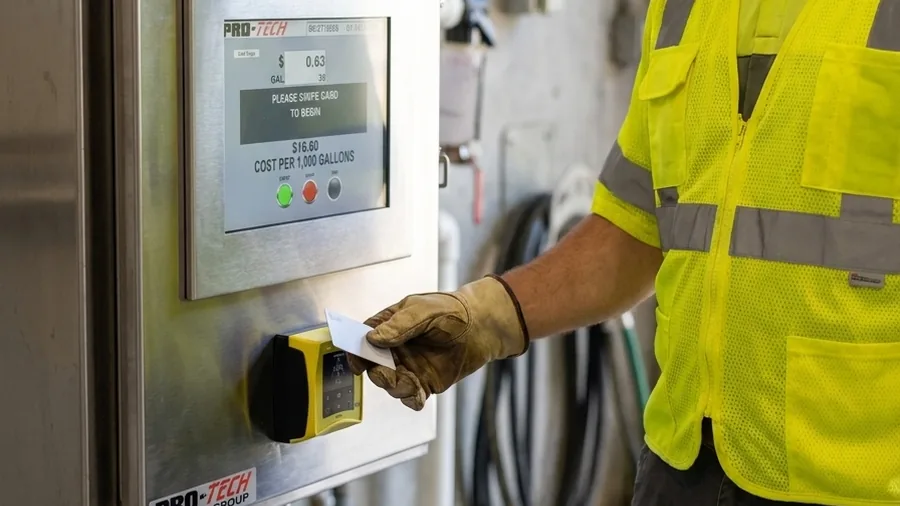
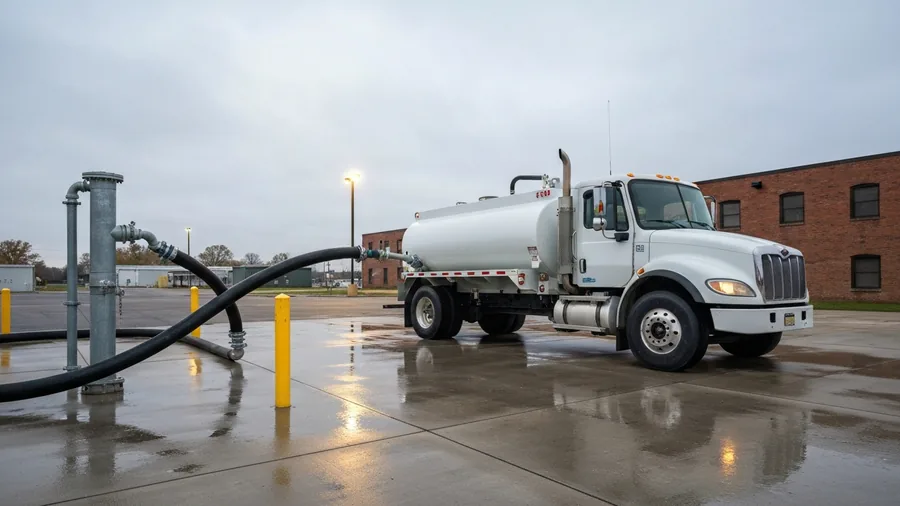
A coin-op station collects physical money on site. Someone drives out, unlocks the box, counts it, and reconciles it against a mechanical meter. A cashless station authorizes a card or an RFID fob at the panel, logs the gallons against the account, and moves the money electronically. No coin pickup, no token inventory, no jammed mechanism on a holiday weekend.
That single change touches three things public works cares about:
- Revenue capture. Every gallon is tied to a paid transaction, so unmetered fills and shrinkage drop close to zero.
- Labor. The coin-collection truck roll disappears, and so does the manual reconciliation that goes with it.
- Compliance. Card payments at a public kiosk fall under PCI and EMV rules, and modern hardware keeps you on the right side of them.
1. Coin jams and vandalism stop costing you
Coin mechanisms are the single most common failure point on a legacy fill station. They jam on debris, freeze in winter, get pried open, and wear out on a schedule no one can predict. Each failure is a double hit: the lost transactions while the unit is down, plus the truck roll to fix it.
Removing the coin path removes the failure. A card-and-RFID front end has no moving cash-handling parts to seize. For a station that sits outdoors through a northeastern winter, that alone often justifies the upgrade.
2. A cashless bulk water station closes the revenue leak
Cash is the hardest revenue to track and the easiest to lose. Coins get miscounted, pickups get skipped, and a mechanical meter that drifts out of calibration will never tell you it is under-reporting. The American Water Works Association has long documented non-revenue water as a structural cost for utilities, and unmetered or under-recorded bulk sales sit squarely in that category. You can read AWWA’s framing of the problem in their water loss control resources.
A cashless station attacks the leak directly. Every fill is authorized before water flows, every gallon is logged against a real account, and the transaction record is the meter of record. Operators replacing coin-only units commonly recover a few percent of gross revenue in the first year, money that was previously lost to jams, skimming, and unrecorded fills rather than to any real discount.
3. EMV and RFID are now the baseline, not a luxury
Two payment methods matter at a bulk fill panel, and a serious station supports both.
EMV card payments are the chip-and-tap standard that replaced magnetic stripe. Stripe-only readers are no longer acceptable for new public-facing payment installations, and the card networks enforce this through the EMVCo specifications. If you are buying a station that will be in service for a decade, stripe-only hardware is a dead end on day one. The current standard is published by EMVCo, and PCI compliance for the surrounding system is defined by the PCI Security Standards Council.
RFID accounts handle your regular haulers. A contractor or municipal crew taps a fob, the panel pulls up their account, and the fill is billed to a monthly statement instead of a one-off card charge. This is what turns a public kiosk into a managed billing relationship, and it is where most of the recovered revenue on a high-volume site actually comes from.
4. The money is tracked, reported, and paid on your schedule
Going cashless only pays off if the data goes somewhere useful. On a Pro-Tech station, every transaction routes through PTSG’s managed billing service. The system records user, gallons, price, date, and time, and the utility receives consolidated payouts on a monthly, quarterly, or annual schedule of its choosing, with line-item reporting attached. Finance gets a clean number it can reconcile, and the raw transaction data stays the utility’s to pull on demand.
This is the piece coin-op can never match. A coin box gives you a bag of money and a meter reading that may or may not agree. A managed cashless system gives you an auditable ledger that a council member or a grant administrator can actually review.
5. Remote price and account control replaces the truck roll
Water rates change. With a coin-op unit, a rate change means sending someone out to re-pin the mechanism. With a networked cashless bulk water station, the operator pushes the new price per thousand gallons from a browser. The same console handles operating hours, account additions, out-of-service flags, and diagnostic checks.
For a department running more than one site, remote management is the difference between managing a fleet from a desk and chasing each panel with a service truck. Add a hauler, change a rate, lock a stolen fob, all without leaving the office.
6. It speaks to your SCADA system
A modern station should not be an island. Pro-Tech’s bulk water fill stations expose flow, pressure, and operational status over Modbus TCP, EtherNet/IP, or OPC UA, so the panel appears as another endpoint in the utility’s existing HMI. The operator sees the fill station on the same screen as the rest of the distribution system, and alarms route through the channels the crew already watches. Coin-op units, by design, tell SCADA nothing.
For the deeper technical specification on payment hardware, enclosure ratings, and integration, see the bulk water station service page.
7. American-made keeps your federal funding clean
This is the factor that decides the buy for a lot of municipalities and gets overlooked until late. Many bulk water upgrades are paid for with federal money: the EPA’s Clean Water and Drinking Water State Revolving Fund loans, or ARPA water-infrastructure allocations. Those programs carry Build America, Buy America (BABA) requirements, which restrict the use of foreign-made iron, steel, and manufactured products.
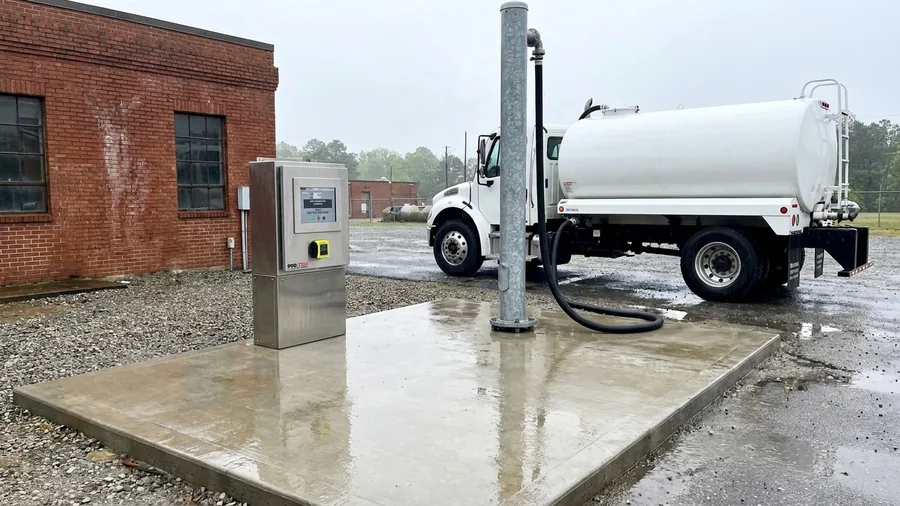
Pro-Tech stations are built in Akron, Ohio, and ship with BABA compliance documentation on request. The largest competitors in this space include a Canadian manufacturer, which puts a procurement officer in an awkward spot the moment federal dollars are involved. You can confirm the funding rules directly through the EPA’s State Revolving Fund program pages. Buying American here is not a slogan. It is what keeps the purchase eligible.
Cashless vs. coin-op at a glance
| Factor | Coin-op station | Cashless bulk water station |
|---|---|---|
| Cash handling | Manual pickup, counting, reconciliation | Electronic, no on-site cash |
| Failure points | Coin jams, frozen mechanisms, pry damage | No cash-handling moving parts |
| Revenue tracking | Mechanical meter, prone to drift | Per-transaction ledger by account |
| Payment methods | Coins, tokens | EMV chip/tap, RFID accounts |
| Rate changes | On-site re-pinning | Pushed remotely from a browser |
| SCADA visibility | None | Modbus TCP, EtherNet/IP, OPC UA |
| Reporting | Bag of coins, manual count | Line-item payouts on your schedule |
What about the cost difference?
A complete cashless station is a larger upfront number than a bare coin mechanism, and there is no point pretending otherwise. Where the math turns is the total cost over the unit’s life. The embedded maintenance cost of a coin station over ten years, every jam, every truck roll, every skipped or short pickup, routinely exceeds the purchase-price gap. Pricing varies enough by flow rate, enclosure, and site conditions that the only honest figure comes after a short site review, which is exactly why we quote per project rather than from a sheet.
One detail that holds the install cost down: the panel is designed so the municipality’s own licensed electrician and plumber can mount and connect it. You are not paying for a vendor crew to sit on site for a week.
Frequently asked questions
What is a cashless bulk water station?
It is a bulk water dispensing unit that takes electronic payment, an EMV card tap or an RFID account fob, instead of coins or tokens. The station authorizes the user, logs the gallons dispensed against the transaction, and reports the revenue electronically, so there is no cash to collect on site.
Is switching from coin-op to cashless worth it for a small utility?
For most sites, yes, because the savings are in avoided failures and recovered revenue rather than in volume alone. A single-site township that loses a few hundred dollars a year to jams, skipped pickups, and unrecorded fills usually recovers the difference well inside the equipment’s service life. The decision turns on your current losses, not on how many trucks fill up.
Can we keep our existing dispensing point and just go cashless?
Often, yes. If the site has utility power, a network connection within reach, and a flow meter with a usable pulse or 4-20 mA output, the payment and control front end can be added without rebuilding the dispensing point. A retrofit is generally faster and lower cost than a full new install.
Who installs the station?
Installation is performed by the municipality’s own licensed electrician and plumber. Pro-Tech provides the panel, control valve, flow meter, and startup service, which keeps the install cost in your control and avoids waiting on an outside crew.
Will a cashless bulk water station integrate with our SCADA system?
Yes. Pro-Tech stations expose flow, pressure, and status over Modbus TCP, EtherNet/IP, or OPC UA, so the unit shows up in your existing HMI alongside the rest of the system.
Does going cashless help with grant funding?
It can, when you buy American-made. Federal programs such as the SRF loans and ARPA water allocations carry Build America, Buy America requirements. Pro-Tech stations are manufactured in Akron, Ohio, and ship with BABA documentation on request.
The bottom line for municipal buyers
Coin-op made sense when cards and networks were not a given at an outdoor kiosk. That era is over. A cashless bulk water station removes the most common failure point, closes the revenue leak that coins create, and gives finance an auditable record that a coin box never could. Add American-made eligibility for federal funding and same-system SCADA visibility, and the case for switching is straightforward. Already operating a station? See how to recover the revenue a cash-handling station is losing.
If you are weighing an upgrade or a new install, start with the 9 things city water departments should know before buying, then talk specifics with us. Pro-Tech Systems Group builds and services bulk water fill stations across the eastern US from Akron, Ohio. Call (330) 773-9828 or reach us through the bulk water station page to set up a site review.
Cashless vs Coin-Op Bulk Water Stations: FAQs
What is the difference between a cashless and a coin-op bulk water station?
A coin-op station accepts only coins or tokens and must be emptied and reconciled by hand, while a cashless station accepts card payments (chip, tap, mobile) and RFID cards and records every transaction electronically. The cashless model removes cash handling, reduces theft, and gives the owner accurate, automatic revenue tracking.
Why are municipalities switching from coin-op to cashless?
Cities switch to stop losing revenue to jammed coin mechanisms, theft, and unrecorded draws, and to eliminate the labor of collecting and counting coins. A cashless station also gives administrators real-time usage data and reconciled payouts on a monthly, quarterly, or annual schedule.
What payment methods does a cashless bulk water station accept?
Pro-Tech Systems Group’s cashless station accepts credit and debit cards by chip, tap-to-pay, and mobile wallet, plus RFID cards issued by the station owner (usually the city or municipality that controls billing).
Does going cashless reduce theft and water loss?
Yes. Because access requires a valid card or RFID credential and every draw is metered and logged, unauthorized use and unrecorded water loss drop sharply compared with a coin-op or open standpipe.
Can a cashless station replace our existing coin-op unit?
Yes. Pro-Tech Systems Group’s control panel can automate an existing bulk dispensing setup and convert it to cashless payment. Installation is performed by the municipality’s own licensed electrician and plumber, with typical total lead time of 14 to 18 weeks.