Key takeaways
- A control system integrator is chosen on fit, not on price. The lowest bid usually excludes the work that decides whether the system is still maintainable in year five.
- Ask who owns the source code and the documentation before the contract is signed. If the answer is not “you do”, every future change goes back through the same vendor.
- Independence matters more than any single brand relationship. A firm tied to one product line will specify that line whether or not it suits the plant.
- The questions that separate integrators are unglamorous: panel fabrication, spare parts, after-hours response, and what handover actually includes.
- Ask for a reference at a plant that looks like yours in size and process, not the largest name on the list.
Choosing a control system integrator is one of the few purchasing decisions in a plant where the cost of getting it wrong shows up years later, long after the invoice is paid and the people who signed it have moved on. The equipment is rarely the problem. What causes trouble is an undocumented system nobody outside the original vendor can modify, a panel that fails its first inspection, or a support arrangement that turns out to mean voicemail on a Sunday.
The nine questions below come out of that gap. They are not about who has the best brochure. They are about what a plant is actually left holding once commissioning is finished.
Why the cheapest bid is rarely the cheapest project
Bids for the same scope of work often differ by a wide margin, and the difference usually is not margin. It is scope that one firm has priced and another has left out: as-built drawings, operator training, network documentation, spare parts, a tested backup of the finished program.
None of that is visible on a line-item comparison. All of it becomes visible the first time the plant needs to change something. A system delivered without documentation is not cheaper. The cost has been moved from the project budget into every future maintenance event, and it compounds.
The questions that follow are designed to surface that hidden scope while there is still leverage to do something about it.
The 9 questions to ask a control system integrator
1. Are you independent, or tied to one manufacturer?
Some integrators are extensions of a single manufacturer’s sales channel. Others buy whatever fits the application. Both models can produce good work, but they produce different recommendations, and a plant should know which one it is talking to.
Ask directly whether the firm is obligated to specify a particular product line, and what happens if a different platform is the better technical answer. An independent firm can tell you when the incumbent equipment is worth keeping. A channel partner has a harder time reaching that conclusion.
Pro-Tech Systems Group has operated as an independent controls and information systems integrator since 1986, which means the recommendation on any given project is not decided before the site visit.
2. What is your certification level on the platforms we already run?
Most plants are not starting from nothing. They have an installed base, and the integrator either knows it well or is going to learn on your budget.
Ask for the specific certification, not a general claim of experience. Manufacturer partner programs are tiered, and the tier is verifiable. Pro-Tech Systems Group is a Rockwell Automation Silver Tier system integrator, which is a defined status rather than a self-description.
If a firm says it works with a platform, ask how many engineers on staff are certified on it and when they were last on a project using it. Certification held by one person who is booked solid is not the same as bench strength.
3. Who owns the code and the documentation when the job is finished?
This is the question most likely to be answered vaguely, and the one with the longest tail.
If the control system program, the HMI project files, the tag database and the as-built drawings are not delivered to the plant in editable form, the plant has bought a system it cannot change without the original vendor. That is a commercial position, not a technical necessity, and it should be settled in the contract rather than discovered later.
Ask for three things in writing: editable source files for every program and screen, complete as-built documentation, and confirmation that the plant may engage any competent party to modify them without voiding support on the rest of the work.
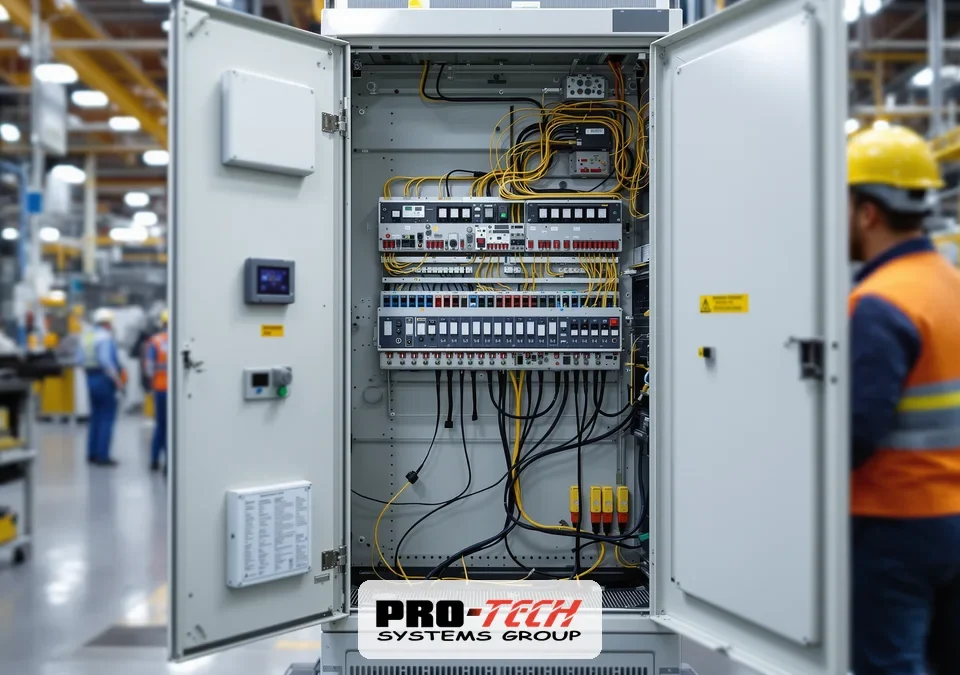
4. Do you build your own control panels?
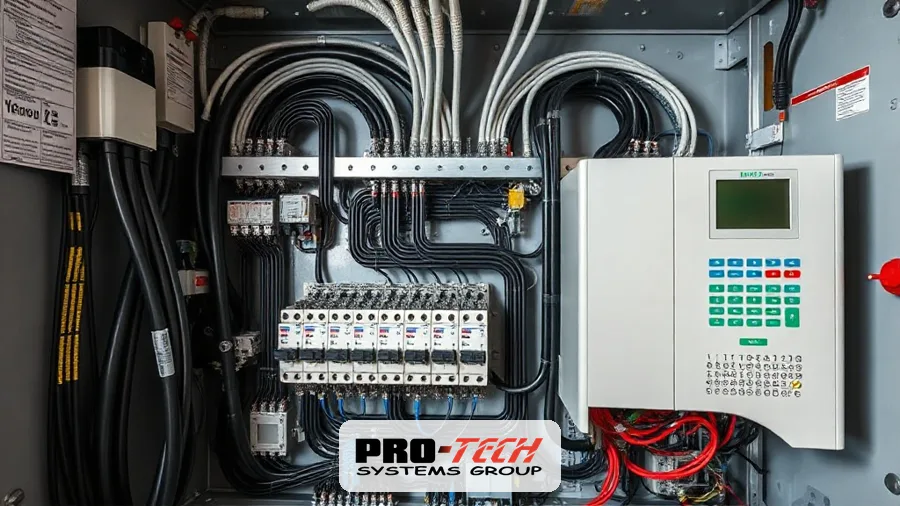
A firm that fabricates panels in house controls the schedule and the quality directly. One that subcontracts is dependent on a third party for both, and the plant usually finds out which arrangement it has when a delivery date slips.
Ask where the panels are built, who inspects them, and whether they carry the appropriate listing for the installation. For industrial control panels in North America that generally means a UL 508A listing, and the label is either on the panel or it is not.
Ask also what happens to the panel drawings. A panel delivered without an accurate wiring diagram is a maintenance problem waiting to happen.
5. What happens when a pump station drops out at 2 a.m. on a Sunday?
Every integrator says it offers support. The useful question is what support means in practice, and the answer should be specific: who picks up the phone, whether that person can log in remotely, how quickly somebody can be on site, and whether any of it is contractual or simply goodwill.
Ask for an example. A firm that has genuinely answered out of hours will have a story ready, and you can check it with the reference. The superintendent at the Elyria Water Plant has said publicly that the Pro-Tech Systems Group team was reached on Christmas Day and helped get his plant back online. That is the kind of claim worth verifying with the plant rather than accepting from the vendor.
For plants running unattended remote assets, this question matters more than almost any other. A remote telemetry network is only as useful as the response behind the alarm it sends.
6. How do you handle obsolete hardware and spare parts?
Control hardware outlives its manufacturer support, usually while it is still working perfectly. The question is whether the integrator has a plan for that or waits for the failure.
Ask whether the firm keeps critical spares, whether it will tell you which components in the proposed design are approaching end of life, and how it handles a migration when a platform is discontinued. A firm willing to point out that part of your existing system has a limited life, and to phase the replacement rather than force it, is showing you how it will behave later.
Phased migration is usually the right answer for a plant that cannot stop. Rip and replace is faster to quote and harder to live through.
7. How do you handle cybersecurity on the systems you install?
Water utilities and manufacturers are both now firmly inside the threat picture for control systems, and the guidance has caught up. CISA maintains advisories and guidance specifically for industrial control systems, and the ISA/IEC 62443 series is the reference standard for securing them.
Ask what the integrator does by default rather than what it can do if asked. Default answers worth hearing include network segmentation between the control network and the business network, no shared credentials, remote access through a controlled path rather than an open port, and a tested backup of the program stored somewhere other than the engineering laptop.
If a firm treats security as a separate line item to be declined, the plant will end up with the insecure version, because that is the one that got quoted.
8. What does handover include?
Handover is where projects quietly fail. The system works on the day the integrator leaves, and then the people who know how it works are gone.
Ask what the plant receives and how the operators are brought up to speed. A complete handover generally includes as-built drawings, the editable program and screen files, the network and IP documentation, a tested backup, a written description of the control philosophy, and training for the people who will run it on the night shift, not only the engineer who attended the meetings.
Ask how long the firm stays available after commissioning and whether that period is in the contract.
9. Can we speak to a plant that looks like ours?
Every integrator has a marquee reference. It is usually the largest and least representative project on the list.
Ask instead for a plant of similar size, running a similar process, that has lived with the system for at least two years. Then ask that plant three things: what went wrong during the project, how the firm handled it, and whether they would use it again.
Nothing goes perfectly. A reference that describes a problem and a reasonable response is more informative than one that reports no problems at all.
Independent control system integrator, OEM, or in-house
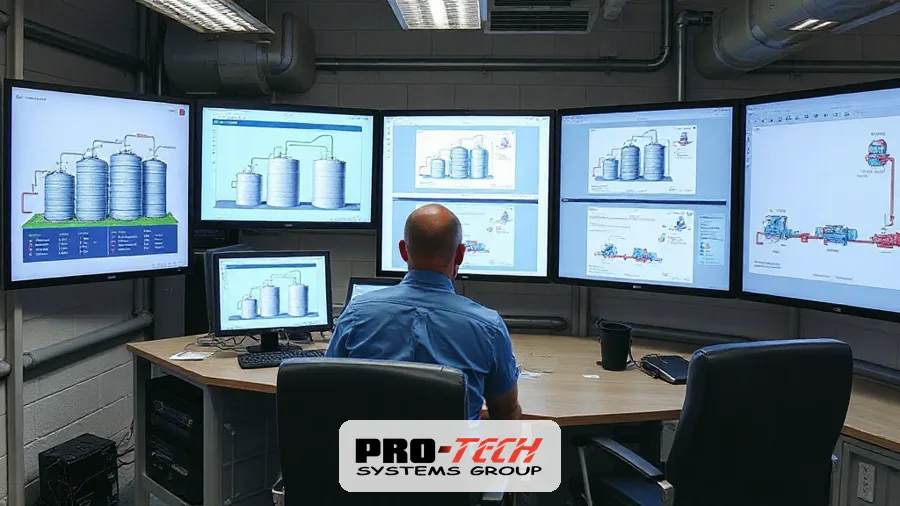
The three routes are not interchangeable, and the right answer depends on how much control the plant wants to keep.
| Independent integrator | Equipment manufacturer | In-house staff | |
|---|---|---|---|
| Platform choice | Selected per application | Usually the manufacturer’s own line | Limited to what staff know |
| Knowledge of your installed base | Learned during scoping | Strong on their equipment, weaker elsewhere | Strongest |
| Availability for a large project | Scales with the firm | Scales, but scheduled centrally | Limited by headcount |
| After-hours response | Contractual, varies by firm | Usually a support contract and a queue | Immediate, if the right person is available |
| Cost of a small change later | Moderate | Often high | Lowest |
| Risk if a key person leaves | Held by the firm | Held by the manufacturer | Concentrated, and severe |
Most plants end up with a combination: in-house staff for daily operation and small changes, an integrator for projects and for work that needs bench strength. The failure mode to avoid is depending on in-house knowledge that lives in one person’s head and is not written down anywhere.
A scoring sheet for a bid review
Score each bidder from 0 to 2 on each question: 0 for no clear answer, 1 for a satisfactory answer, 2 for an answer backed by evidence such as a certificate, a sample document, or a reference who confirms it.
- Independence, and willingness to recommend against a product line
- Verified certification on your installed platforms
- Source code and documentation ownership, in writing
- Panel fabrication and listing
- After-hours response, with a checkable example
- Obsolescence and spare parts policy
- Default cybersecurity practice
- Handover contents and training
- A reference at a comparable plant
A firm scoring 14 or above is worth shortlisting. Any zero on questions 3, 5 or 8 is worth treating as disqualifying regardless of the total, because each one moves a cost or a risk onto the plant that will not be visible until after the project closes.
The Control System Integrators Association runs a certification program that audits member firms against a defined set of business and technical practices, which is another external signal worth checking.
Frequently asked questions
What does a control system integrator actually do?
A control system integrator designs, programs, builds and commissions the systems that run industrial processes. That covers PLC and DCS programming, HMI and SCADA development, instrumentation, control panel fabrication, network and telemetry design, and the commissioning work that ties it together. The integrator is the party responsible for making equipment from several manufacturers behave as one system.
How is an integrator different from an electrical contractor?
An electrical contractor installs the physical infrastructure: conduit, wiring, terminations, power. A control system integrator is responsible for the logic and the information, meaning what the system does, how it decides, what it records and how operators see it. Larger projects normally use both, and it is worth being clear which party owns which scope before work starts.
Should we hire a local integrator?
Proximity matters most for the work that cannot be done remotely, which is commissioning, instrumentation and emergency call-outs. For a plant with unattended remote sites, a firm within reasonable driving distance is a practical advantage rather than a preference. Pro-Tech Systems Group works from Akron, Ohio and supports plants across the eastern United States.
Who should own the PLC program after the project?
The plant should. Editable source files, the tag database, HMI project files and as-built documentation belong to the owner of the system, and that should be stated in the contract rather than assumed. A firm unwilling to agree to it is describing a long-term dependency.
What certifications should we look for?
Manufacturer partner status at a stated tier, appropriate panel listings such as UL 508A for industrial control panels, and evidence that the firm follows a recognised security standard such as ISA/IEC 62443. Membership of an audited industry body is a useful additional signal.
How long does a typical control system project take?
It depends far more on scope than on the integrator. Panel fabrication alone commonly runs several weeks, and a plant-wide project with phased cutover is measured in months. What matters at bid stage is whether the schedule accounts for long-lead hardware and for the plant’s own operating constraints, since a treatment plant cannot simply stop while the work happens.
Can an integrator work on a system somebody else installed?
Yes, provided the documentation and source files exist. Where they do not, the first phase of the work is usually recovering and documenting what is actually installed, which is billable effort that should be scoped honestly up front rather than discovered halfway through.
Talking to Pro-Tech Systems Group
Pro-Tech Systems Group has worked as an independent control system integrator since 1986, from Akron, Ohio, for water and wastewater utilities, oil and gas operators, and discrete and process manufacturers. The firm handles design, programming, panel fabrication, instrumentation and commissioning as a single source.
If a project is being scoped, get in touch or call (330) 773-9828. Put the nine questions above to us in the same form you put them to everyone else.