Key takeaways
- There is no list price for a SCADA system. Two plants of the same size can differ by an order of magnitude depending on what is already installed and how far apart the remote sites are.
- Five things move SCADA system cost the most: the existing system, the number of remote sites, the tag count, how each site communicates, and whether control panels need building or retrofitting.
- Communications is the factor plants underestimate most often. Reaching a site with no usable path costs more than the equipment at that site.
- Software licensing is usually a smaller share of the total than people expect. Engineering labour is usually larger.
- Ask for a scoped estimate rather than a price. Any number quoted before someone counts your tags and looks at your panels is a guess.
The honest answer to what a SCADA system cost looks like is that it depends, and that is not evasion. A SCADA system is built around one plant’s process, its existing equipment and its reporting obligations, so the same brief at two utilities produces two different systems. A single lift station brought online with cellular telemetry and a plant-wide migration across thirty remote sites are both accurately described as SCADA projects, and they are separated by two orders of magnitude.
What can be described precisely is what drives the number. Once a plant understands the seven factors below, it can scope its own project well enough to read a quote critically, and to know whether two bids are even describing the same work.
What drives SCADA system cost
1. What you are running now
The single largest variable is the starting point, and there are three broad cases.
A plant with no automation beyond local controls is a greenfield installation. Everything is new, which is expensive but predictable, and there are no surprises hiding in undocumented legacy wiring.
A plant running an aging system that still works is a migration. This is the most common case and the most variable in cost, because the price depends on how much of the existing equipment can be kept. Field instruments, wiring and panels often survive a migration perfectly well. The controllers and software may not.
A plant with a partial system, where some areas are automated and others are not, is usually the most awkward to scope. The work involves making new and old coexist, sometimes indefinitely, and that integration effort is real engineering time that a simple equipment list will not show.
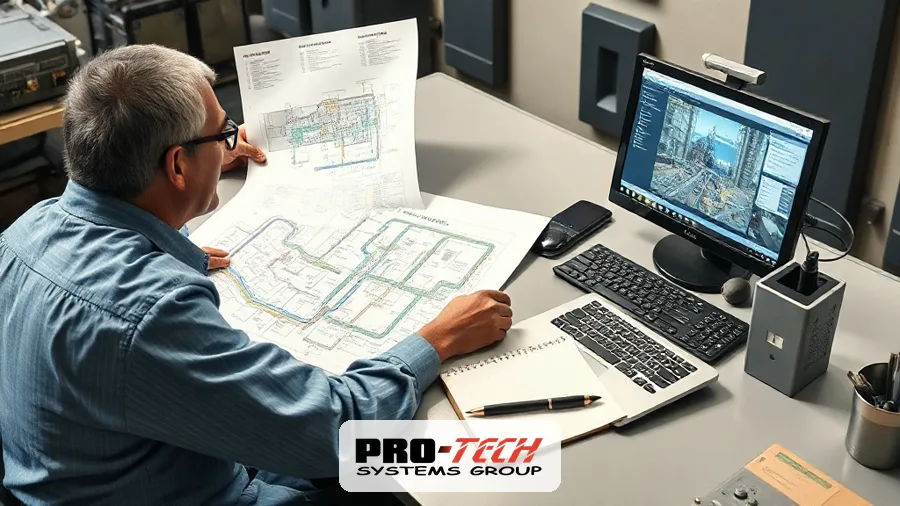
There is a fourth case worth naming: a plant that has a system but no documentation for it. Recovering and documenting what is actually installed is billable work that has to happen before anything else, and an integrator who does not scope it honestly at the start will find it later.
2. How many remote sites
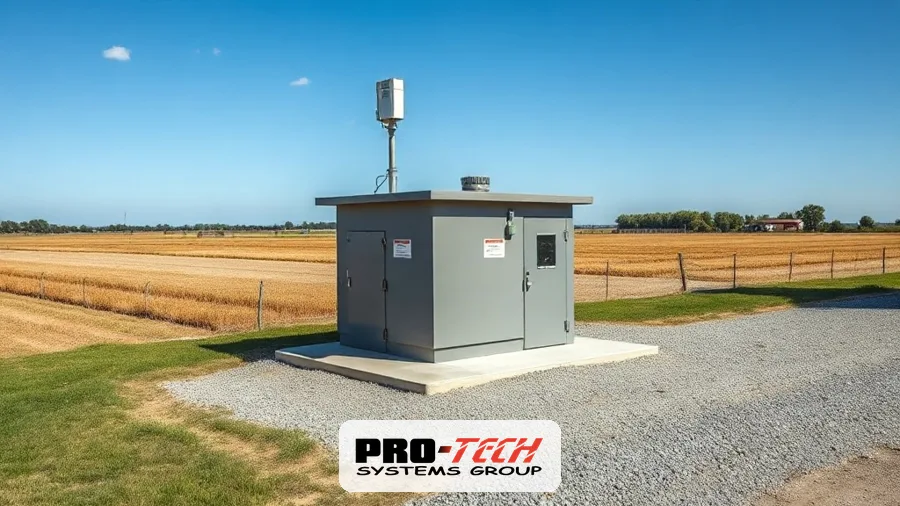
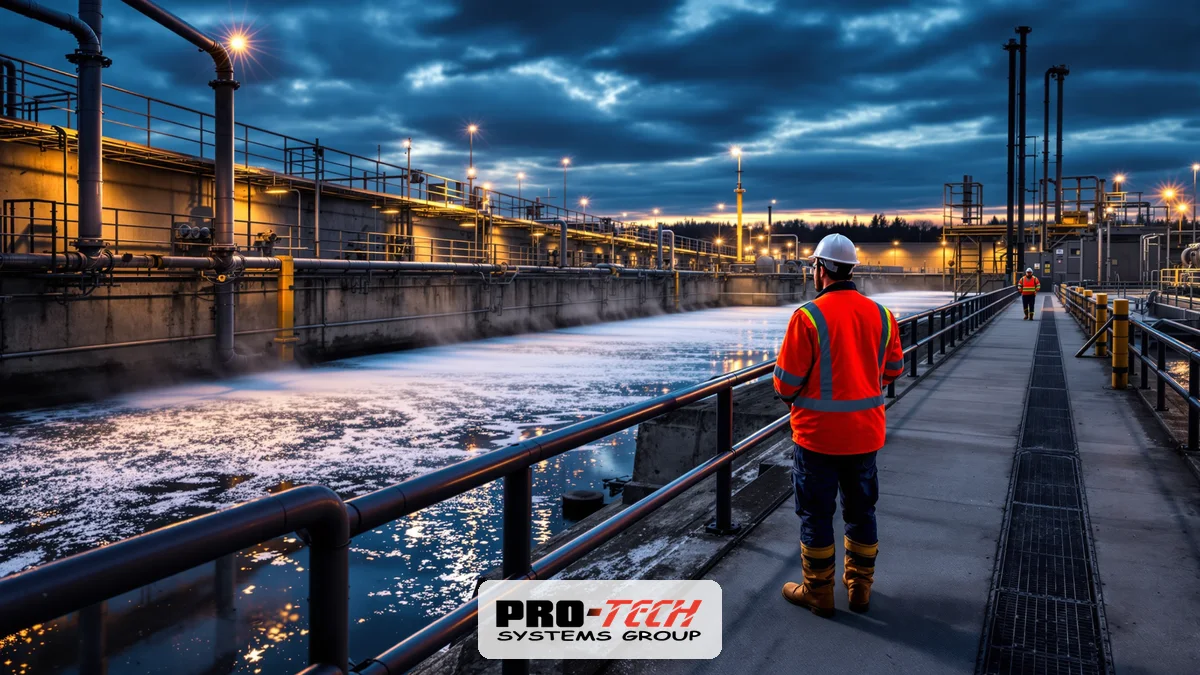
Cost scales with sites more sharply than with plant size, because every remote site carries a fixed overhead regardless of how little it does. A lift station monitoring three points still needs an enclosure, a controller or RTU, power, surge protection, a communications path and a site visit to commission it.
For a single treatment plant with everything inside the fence, this factor barely applies. For a collection system with pump stations spread across a county, it is often the dominant line in the budget. Plants comparing quotes should check that both bidders have counted the same number of sites and have priced commissioning travel realistically.
This is also where phasing helps most. Remote sites can usually be brought on in groups over several budget years without compromising the design, provided the SCADA architecture is planned for the full count from the beginning.
3. How many points and tags
A tag is a single piece of information the system reads or writes: a level, a flow, a pump run status, a valve command, an alarm. Tag count is the closest thing the industry has to a unit of measurement for system size, and it pushes SCADA system cost in several directions at once.
It drives software licensing, since most SCADA platforms are licensed in tag bands. It drives engineering labour, because every tag has to be configured, mapped to a screen, given alarm limits and tested. It drives historian sizing and, if the plant has compliance reporting, the reporting effort as well.
Plants routinely underestimate this number. The instinct is to count instruments, but a single pump typically produces several tags once run status, fault, hours, current and control mode are included. Counting properly before requesting quotes is the highest-value hour a plant can spend on this process.
4. How the plant communicates with each point
This factor most often separates a comfortable budget from an uncomfortable one, and it is the one plants are least likely to have thought about.
Getting data from a point to the control room requires a path. Inside a plant that usually means hardwired or fibre, which is straightforward. Across a distributed system it means licensed or unlicensed radio, cellular, leased circuits, or some combination, and the right answer depends on geography, terrain, existing infrastructure and how much latency the process tolerates.
The cost consequences are large. A site within reach of an existing radio network is inexpensive to add. A site in a hollow with no line of sight and marginal cellular coverage may need a repeater, a tower, or a different technology entirely, and that one site can cost more than several straightforward ones combined.
Cellular carries a recurring cost per site that radio does not, so the comparison changes with the size of the system and the time horizon. We cover that trade-off in detail in our comparison of industrial cellular modems and radio telemetry, and the telemetry page covers the site survey work that settles it. Any estimate produced without someone confirming that each site can actually be reached is provisional.
5. Whether control panels need building or updating
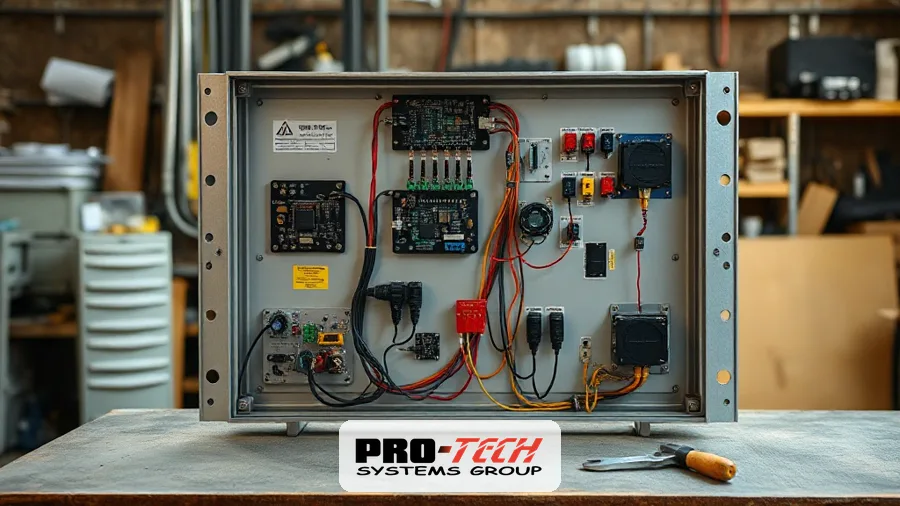
Panels are physical goods with lead times, and they behave differently from software in a budget.
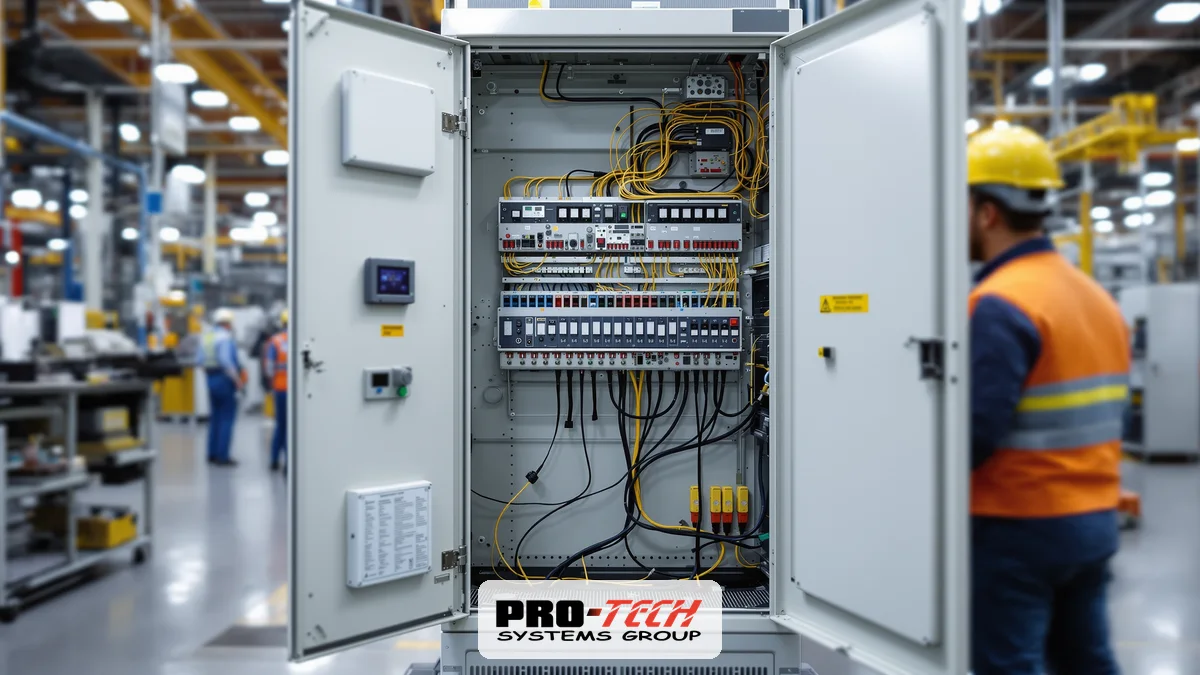
Some projects need no panel work at all: new controllers drop into existing enclosures and the wiring stays. Some need retrofits, where an existing panel is rebuilt around new hardware. Some need entirely new panels, which means design, fabrication, listing, factory testing, delivery and installation.
New panels also introduce schedule risk that the rest of the project does not have. Fabrication lead times move with the supply chain, and a project waiting on a panel is a project that is not commissioning. It is worth asking an integrator early which parts of the design have long lead times, because that answer shapes the schedule more than anything else.
6. What the system has to do
Monitoring, control and reporting are three different scopes, and they are not priced the same.
A monitoring system reads values and raises alarms. It is the least expensive of the three and often the right first phase, because it delivers most of the operational benefit immediately.
A control system also writes: it starts pumps, modulates valves, runs sequences. Control demands more engineering rigour, more testing and more attention to failure modes, because the consequences of a defect are physical rather than informational.
Reporting is the one plants forget to scope. If the system has to produce regulatory reports, the historian, the data retention policy and the report templates all become part of the project, and building a report that satisfies a regulator is more work than building the screen that displays the same data. For water utilities this is rarely optional, given EPA drinking water reporting requirements. Our water and wastewater automation work almost always includes it.
7. Software licensing, and why it matters less than expected
Licensing is the part buyers ask about first and it is usually not the largest number in the project.
Platforms differ in model. Some license by tag count, some by client connection, some by server, some with an unlimited-tag model that costs more up front and less as the system grows. The right choice depends on the tag count from factor 3 and on how much the plant expects to expand, which is why the licensing question cannot be answered before the scoping question.
For most projects, engineering labour exceeds licensing, often substantially. Configuration, screen development, testing, commissioning and training are where the hours go, and together they usually account for more of the SCADA system cost than every software line item combined. A quote where software dominates the total is worth asking about, and so is one with almost no commissioning time in it.
How to scope your own estimate before you call anyone
An hour spent on the following will make every quote you receive more comparable, and will tell you quickly whether a bidder has understood the job.
- Write down what is installed today, by area, including the make and vintage of any existing controllers, and note where documentation exists and where it does not.
- Count your remote sites. List each one with its distance from the plant and whether it currently has power and any communications.
- Count your tags properly. Go instrument by instrument and pump by pump, and include status, fault and control tags, not only process values.
- For each remote site, note how you believe it would communicate, and mark the ones you are unsure about. Those are the sites that need a survey.
- Note which panels you expect to keep, retrofit or replace, and whether any have known problems such as failed inspections or undocumented modifications.
- Decide what the system must do in each area: monitor only, monitor and control, or monitor, control and report.
- Write down what reports you are obliged to produce and to whom.
A bidder who asks for all seven of these unprompted is scoping the job. One who quotes a SCADA system cost without them is guessing, and the guess will be corrected later at your expense.
Phasing, and why it usually costs less overall
Plants that cannot stop rarely benefit from doing everything at once. A phased approach spreads the cost across budget years, but it also reduces risk, because each phase is commissioned and proven before the next begins, and operators learn the system gradually rather than all in one week.
The condition is that the architecture has to be designed for the finished system from the start. Phasing a well-designed system is straightforward. Phasing a system that was designed one piece at a time produces a collection of things that do not talk to each other, and unwinding that later is more expensive than doing it properly would have been. The same logic applies to security, where CISA guidance for industrial control systems is easier to build in from the first phase than to retrofit across a finished system.
Frequently asked questions
Why will nobody quote a SCADA system cost over the phone?
Because the honest number depends on what is already installed, how many remote sites exist, how many tags the system reads, how each site communicates and whether panels need work. None of that can be established from a phone call. A number given without it is a guess that will be revised, usually upward.
What is the biggest hidden cost in a SCADA project?
Communications to hard-to-reach remote sites, followed by recovering documentation for an existing system nobody has records for. Both are discovered during the work rather than during a walk-through of the equipment list, which is why an experienced integrator scopes for them deliberately.
Is licensing the largest part of the cost?
Usually not. Engineering labour, configuration, testing and commissioning normally exceed software licensing. A quote dominated by licensing, or one with very little commissioning time, is worth questioning.
Can we keep our existing instruments and panels?
Often yes. Field instruments and wiring frequently survive a migration, and panels can sometimes be retrofitted rather than replaced. This is one of the biggest levers on the total, and it is worth asking an integrator to assess specifically rather than assuming either answer.
How much does a single remote site cost to add?
It varies more than any other unit in the project, because the enclosure, controller and instruments are the predictable part and the communications path is not. A site within reach of an existing network is inexpensive. A site with no usable path can cost several times as much as its equipment.
Should we do the whole plant at once?
Rarely, if the plant cannot stop. Phasing spreads cost across budget years and lowers risk, provided the overall architecture is designed up front for the finished system.
What ongoing costs should we budget for after commissioning?
Software maintenance or subscription where applicable, cellular data plans for any sites using them, periodic instrument calibration, spare parts, and support. These are modest next to the project but they are not zero, and they should be in the business case from the beginning.
Getting a real number
Pro-Tech Systems Group has been scoping and building control systems from Akron, Ohio since 1986, for water and wastewater utilities, oil and gas operators and manufacturers across the eastern United States. A useful SCADA system cost estimate starts with a conversation about what is installed and a look at the sites.
If a project is being planned, contact us or call (330) 773-9828, and bring the seven items from the scoping list above. It will make the conversation considerably shorter.