Key takeaways
- Data center water usage matters to Ohio utilities because cooling demand lands on the same municipal systems that already serve homes and industry.
- The PORTS Technology Campus in Pike County is planned at a scale, roughly 10 gigawatts, that changes regional demand rather than adding to it incrementally.
- The effect on most Ohio plants is indirect: grid load and power quality, not a contract to bid on.
- Power quality events cause more control system trouble at treatment plants and factories than outright outages do, and most plants are not instrumented to see them.
- The practical response is visibility. A plant that logs its own power and process data can prove what happened. One that does not is left arguing about it.
Ohio has become one of the more consequential places in the country for data center construction, and the scale involved is different in kind from developments the state has absorbed before. For the water utilities and manufacturers already operating here, the useful question is not who is building what. It is what a demand increase of this size does to the grid and the water systems those plants depend on, and what a plant can reasonably do about it. Data center water usage and electricity demand both attract attention, and both are relevant.
What follows is aimed at the people running existing plants in the region, not at anyone developing a campus.
What is actually being built
The largest of the announced projects is at the former Portsmouth Gaseous Diffusion Plant in Pike County, a Cold War uranium enrichment site being redeveloped as the PORTS Technology Campus. Under a Department of Energy public-private partnership announced in March 2026, SB Energy, a SoftBank Group company, is building a 10 gigawatt data center development on the site alongside 10 gigawatts of new power generation, including 9.2 gigawatts of natural gas.
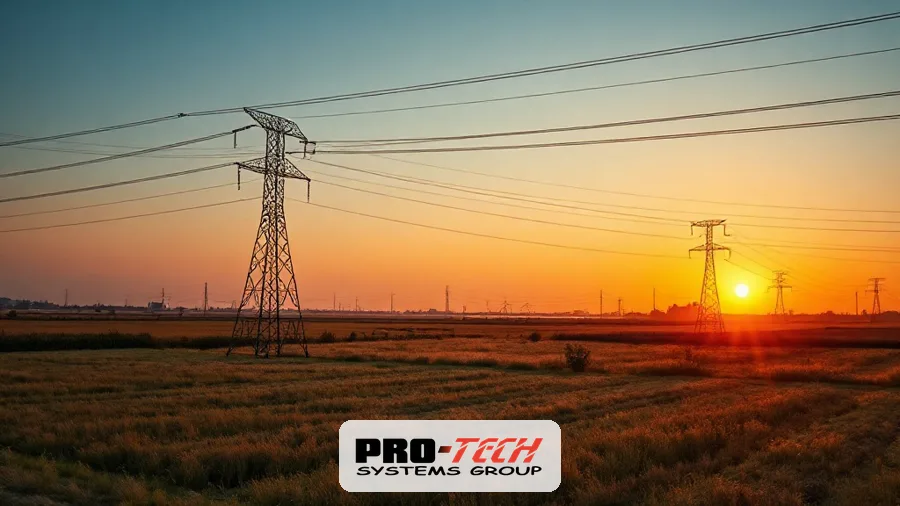
The transmission work is being built by AEP Ohio: roughly 50 miles of 765 kilovolt line, at a cost of $4.2 billion. Worth noting for anyone in the region, SB Energy is funding that transmission investment rather than Ohio ratepayers. AEP Ohio expects power to begin flowing to the site in 2029.
Ten gigawatts is a difficult figure to hold in your head. The more useful framing for a plant manager is the second number. Some 9.2 gigawatts of new gas generation and 50 miles of new 765 kV transmission are being added to a grid that was not planned around them, on a timeline running to the end of the decade. Whatever else that is, it is not a marginal change in regional infrastructure.
Data center water usage and what it means for utilities
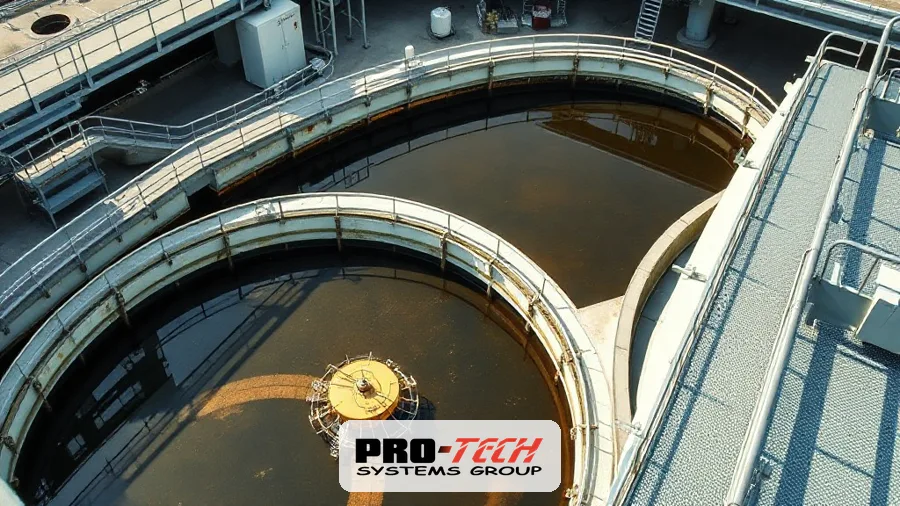
Large data centers use water primarily for cooling, and the amount depends heavily on the cooling technology chosen. Closed-loop and air-cooled designs consume very little water and more electricity. Evaporative cooling consumes considerably more water and less electricity. The trade-off is a design decision, and it is the single largest factor in what any given facility draws.
For a municipal utility the questions that follow are practical ones. Where does the supply come from, and is it the same source the utility already draws on. What happens to the discharge, and does it arrive at a treatment plant sized for it. What does the demand profile look like across a day and a year, since cooling load rises in exactly the weather when a system is already stressed.
None of this is unmanageable, and utilities negotiate large industrial connections routinely. What changes with a facility of this scale is that the margin for error narrows. A utility running close to capacity has less room to absorb a new load than the same utility did a decade ago, and the planning horizon for adding capacity is measured in years.
The instrumentation question follows directly. A utility with good data on its own flows, pressures and treatment capacity is in a position to model what an additional load does. One monitoring at a handful of points and reconciling the rest manually is not, and that gap becomes expensive at exactly the moment a decision has to be made quickly. This is the ordinary case for SCADA in water treatment, made more pressing by the scale of what is being added.
The power side, which affects more plants
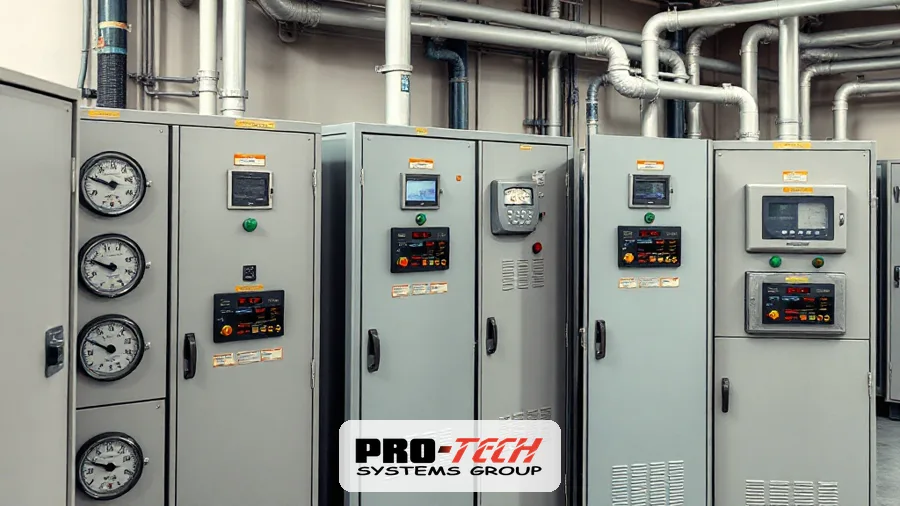
Most Ohio plants will never see a data center. Nearly all of them are on the same grid, and that is where the effect actually reaches them.
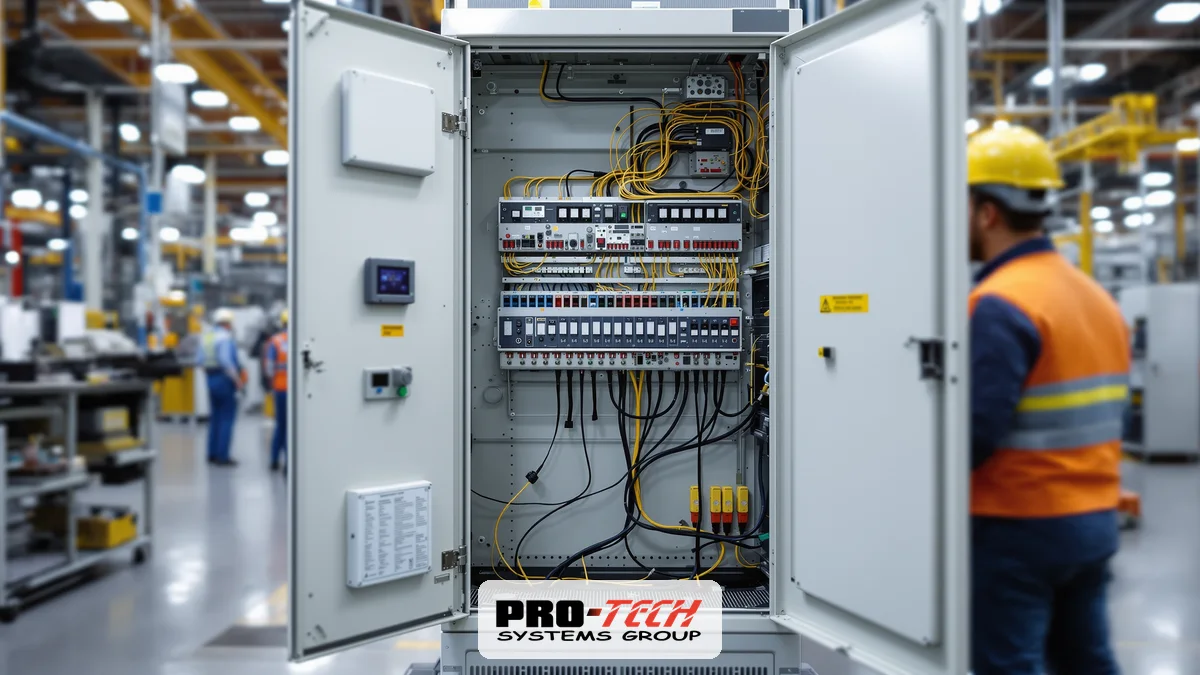
The concern is less about outages than about power quality. Voltage sags, momentary interruptions and harmonic distortion cause a great deal of trouble in industrial plants, and they rarely announce themselves. A sag lasting a fraction of a second will not trip the lights, but it can drop out a variable frequency drive, reset a controller, or halt a process line that then takes hours to restart. Plants routinely record these as unexplained faults because nothing was watching the incoming power closely enough to attribute them. The IEEE 1159 recommended practice defines and classifies these events, and it is a useful reference when specifying monitoring.
Large new loads and substantial transmission work both change the character of a regional grid. Whether any individual plant sees more disturbance is a question that has to be answered locally rather than assumed, and answering it requires measurement.
The practical position for a plant manager is straightforward. If a process is sensitive to power quality, and most modern automated processes are, then knowing what the incoming supply is actually doing is worth more than speculating about what a distant project might cause. Without that record there is no way to distinguish a supply problem from an equipment problem, and no basis for a conversation with the utility.
What a plant can usefully do
Nothing here requires anticipating a specific event. These are the things that make a plant better able to describe what happened to it.
Log power quality at the service entrance. Recording voltage, sags, interruptions and harmonics gives a plant a timestamped record. When a line drops out, the question of whether the cause was inside or outside the fence becomes answerable rather than a matter of opinion.
Timestamp process events against it. Power data is far more useful when it lines up with process data. A control system that historizes events with reliable timestamps lets a plant correlate a trip with a disturbance, which is the difference between diagnosing a problem and replacing components until it stops.
Check what your controllers do on a brownout. Ride-through behaviour varies widely between hardware generations, and a plant running older controllers may have less tolerance than the people operating it assume. This is worth confirming deliberately rather than discovering.
Extend monitoring to remote assets. Distributed sites are the least visible part of most systems, and a pump station that fails during a disturbance may not be noticed until a downstream consequence appears. Remote telemetry closes that gap.
Review what your backup power actually covers. Generators and UPS systems are frequently sized for a plant as it was some years ago, and load has usually grown since. What matters is not whether backup exists but whether it covers the specific equipment whose loss causes the expensive failure.
What this does not mean
It would be easy to read a project of this size as a reason for alarm, and that is not the argument. Ohio’s grid and its utilities absorb large industrial loads as a matter of routine, and the transmission investment attached to this project is substantial precisely because the load is.
It is also worth being clear that most of the work associated with a campus of this kind is beyond the scale of regional engineering firms and is handled by organisations built for projects of that size. The relevant question for a plant in Akron or Canton or Elyria is not whether to participate. It is whether the plant has enough visibility into its own power and process to know how it is being affected.
That question is worth answering regardless of what gets built in Pike County.
Frequently asked questions
Why do data centers use water at all?
Primarily for cooling. Evaporative cooling systems use water to reject heat and consume a meaningful amount in the process. Closed-loop and air-cooled designs use much less water and more electricity. The design choice, more than the size of the facility alone, determines data center water usage.
Does a data center affect my municipal water supply?
Only if it draws on the same system. Large facilities frequently negotiate dedicated supply arrangements. Where a facility does connect to a municipal system, the effects a utility watches are peak demand coinciding with hot weather, and the volume and character of discharge arriving at treatment.
Will this cause power outages for existing plants?
Outages are not the likely effect. Power quality disturbances are the more realistic concern for automated plants, and they are also the ones most plants cannot currently measure. Whether any individual site sees a change depends on local grid conditions.
What is a voltage sag and why does it matter?
A brief drop in supply voltage, often lasting a fraction of a second. It is too short to be noticed by people but long enough to drop out drives and reset controllers. Sags cause far more unplanned downtime in automated plants than full outages do.
How would we know if power quality is affecting us?
By measuring it. A power quality monitor at the service entrance, with data timestamped against process events, will show whether unexplained trips correlate with supply disturbances. Without that record the question cannot be settled.
Is it worth adding monitoring now?
Power and process monitoring pay for themselves through faster fault diagnosis regardless of what happens regionally. The regional context makes it more timely, not newly worthwhile.
Where can I read the project details directly?
The Department of Energy has published material on the PORTS Technology Campus partnership, and AEP Ohio has published details of the $4.2 billion transmission investment and the Piketon Area Improvements Project. Those are better sources than secondary coverage.
Where Pro-Tech Systems Group fits
Pro-Tech Systems Group has worked from Akron since 1986 on control and monitoring systems for water and wastewater utilities, oil and gas operators and manufacturers across the eastern United States. The work relevant to everything above is the ordinary kind: instrumenting a plant so its operators can see what is happening, historizing it so they can prove what happened, and extending that visibility to remote sites.
If power quality events or unexplained trips are a recurring problem at your plant, get in touch or call (330) 773-9828.