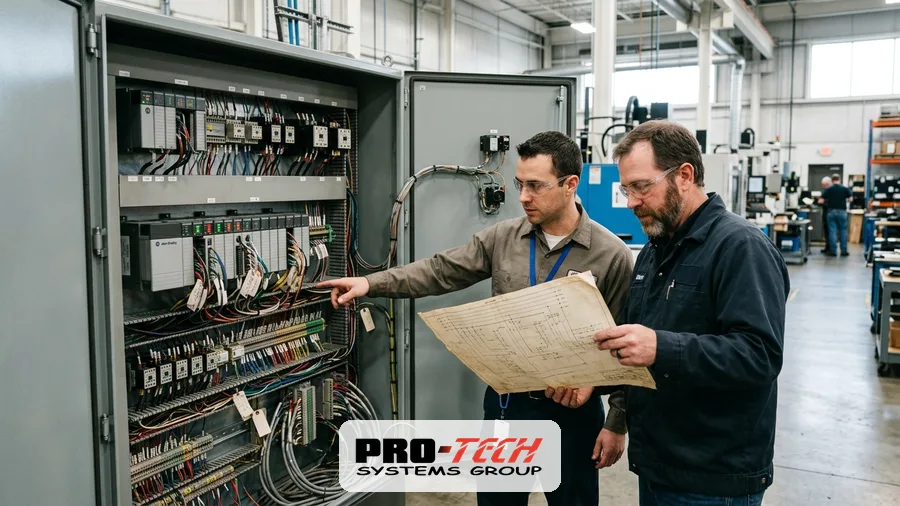
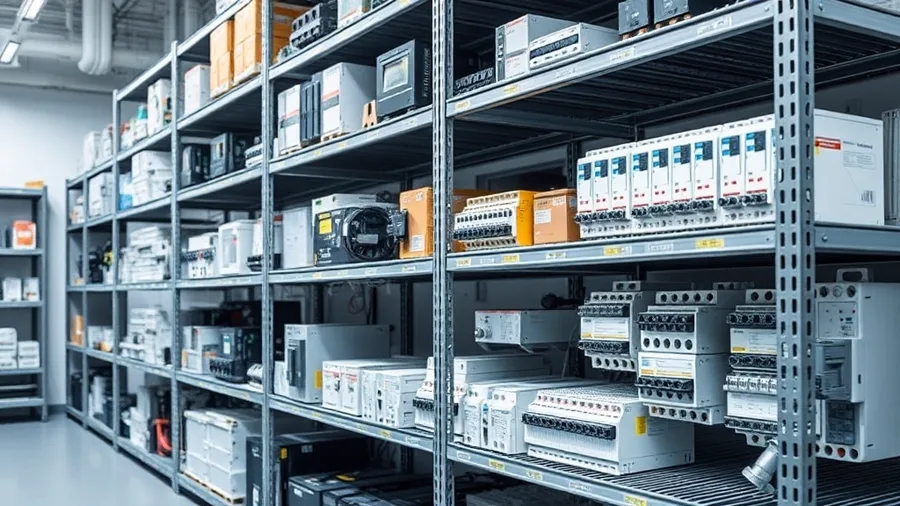
A power supply fails in a control panel at 2 a.m. The line goes down. The part has a ten-week lead time. That single $300 component now represents weeks of lost production, expedited freight, and an emergency service call — a five- or six-figure problem created by the absence of a part that would have sat quietly on a shelf. Keeping critical spares on hand is the cheapest insurance a plant buys, and most facilities are underinsured.
The instinct is to stock everything or stock nothing. Neither works. Stocking everything ties up cash and shelf space in parts that may never fail; stocking nothing guarantees that the next failure becomes an outage. This article covers the eight control-panel components worth keeping on the shelf, a simple way to decide what makes your own list, and the storage details that quietly ruin spares before you ever install them.
The real cost of not having the part
The price of a spare is rarely the issue — the cost of not having it is. When a control component fails without a replacement on site, you pay in four ways at once:
- Downtime at the plant’s true hourly rate (often thousands of dollars per hour, not the cost of the part).
- Expedited freight and after-hours fees to get the part and a technician on site fast.
- Obsolescence risk — if the failed part is no longer made, an “emergency replacement” can turn into an unplanned migration.
- Cascading effects — missed shipments, overtime to recover, and in regulated industries, compliance exposure.
Run the math once for your own line and the case for a stocked shelf makes itself. A spare that prevents one day of downtime usually pays for the entire critical-spares inventory.
Why lead times keep getting worse
Three forces have stretched control-component lead times well past where they sat a decade ago.
The first is obsolescence. Automation vendors actively retire older PLC, HMI, and drive families. Rockwell Automation, for example, publishes product lifecycle status that moves hardware from Active to Mature to End-of-Life — and once a product hits End-of-Life, new stock dries up and prices climb.
The second is allocation. Semiconductor and component shortages over recent years taught every plant manager that “we’ll just order one” is not a plan. Lead times that were two weeks became six months, and they have not fully recovered for some legacy parts.
The third is the legacy installed base. Many panels still run controllers and drives that are a decade or two old. The day one fails, the replacement may only exist on the secondary market — which is exactly the situation a stocked spare avoids.
The 8 critical spares to stock
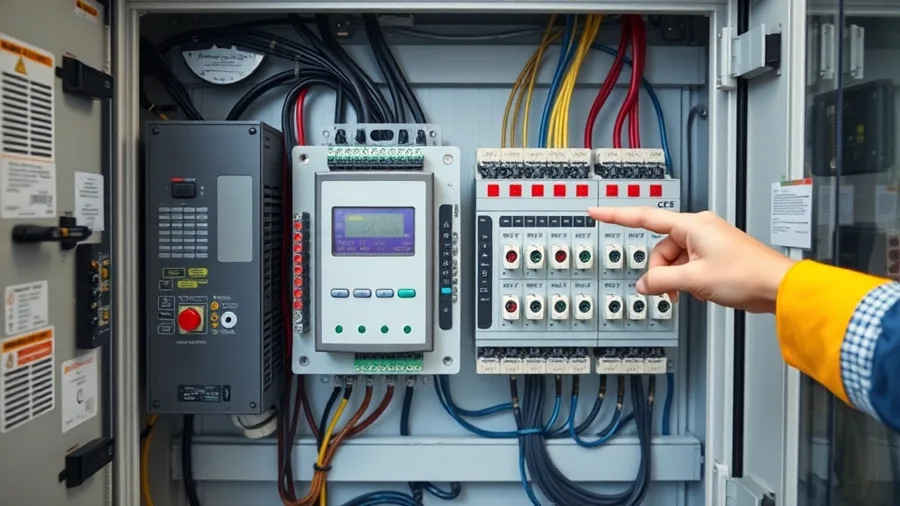
These are the components most likely to fail or to leave you stranded when they do. Match the exact part numbers in your panels.
1. PLC CPU and I/O modules
The brain of the panel. A failed CPU or I/O card stops everything downstream. Stock the exact processor and the I/O module types you use most, especially for any controller family approaching End-of-Life.
2. Power supplies
The single most common control-panel failure point. DC power supplies run hot, age, and quit. They are inexpensive, fail without warning, and take the whole panel down — the textbook critical spare.
3. Circuit breakers and fuses
Cheap, small, and easy to overlook until a nuisance trip or a fault leaves you hunting for the right rating at midnight. Keep a labeled set of every breaker and fuse rating in the panel.
4. Relays and contactors
Electromechanical parts wear out — contacts pit, coils fail. Control relays and motor contactors are high-cycle components with a finite life, which makes them predictable failures worth spareing in advance.
5. HMI / operator interface
When the operator’s screen goes dark, the line is effectively blind even if the process is fine. HMIs are also frequent obsolescence casualties, so a matching spare protects against both failure and a discontinued model.
6. Communication modules and network switches
Ethernet/IP and Modbus modules, media converters, and industrial switches are the connective tissue of a modern panel. One failed switch can isolate a section of the plant from SCADA. Keep spares for the switch models your network depends on.
7. Variable frequency drives (VFDs)
Drives are among the more expensive parts to stock and among the longest to source when discontinued. For any motor whose stoppage halts production, a spare drive — or at minimum the control board and cooling fans — belongs on the list.
8. Surge protection and terminal blocks
The low-glamour items that still cause outages. Surge protective devices sacrifice themselves to save the panel and must be replaced after an event; specialty terminal blocks and fuse holders can be oddly hard to source. A small kit of each prevents a long delay over a cheap part.
How to decide what to stock: a criticality matrix
You do not need a spare for everything — you need spares for the parts where failure hurts and replacement is slow. A simple scoring approach works:
Criticality = failure likelihood × downtime impact × lead time
Score each component 1–5 on three questions:
- How likely is it to fail? (power supplies, relays, drives score high; passive parts score low)
- What happens to production if it fails? (single point of failure scores high; redundant component scores low)
- How long to replace it? (obsolete or long-lead parts score high; off-the-shelf parts score low)
Multiply the three. The high scorers are your critical spares; the low scorers can be ordered when needed. This keeps inventory focused on the parts that actually protect uptime instead of filling shelves with cheap insurance you will never use. The approach mirrors the criticality analysis taught in formal maintenance and reliability best practices — rank by consequence and likelihood, then spend the spares budget where it buys the most uptime. It pairs naturally with watching for the early signs that a PLC needs an upgrade — a controller heading toward obsolescence is both a spares priority and a modernization candidate.
Storage and shelf-life gotchas
A spare that fails on the shelf is worse than no spare, because you discover the problem at the worst moment. Watch four things:
- Electrolytic capacitors in power supplies and drives can degrade if a unit sits unpowered for years. For high-value drives, some manufacturers recommend periodic powering or reforming.
- Battery-backed memory in older PLCs loses its program if the backup battery dies in storage. Store the program separately and check batteries.
- Firmware match — a spare module may ship with newer firmware than your installed base. Note the required firmware version on the part.
- ESD and environment — keep electronics in antistatic packaging, in a climate-controlled space, away from the humidity and temperature swings of a plant floor.
Label every spare with its part number, the panels it serves, the firmware version, and the date it was stocked. A spare nobody can find during an outage is not really a spare. Treat the critical spares inventory as living documentation: review it whenever a panel is modified, a controller is upgraded, or a vendor moves a part toward End-of-Life.
When to let your integrator manage critical spares
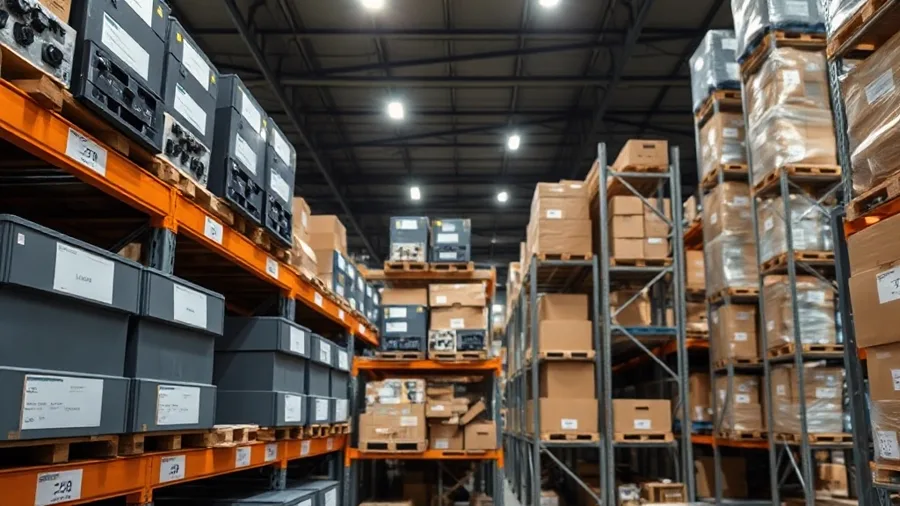
For many plants, the practical answer is to let the system integrator who knows the panels maintain the critical-spares list. An integrator can cross-reference your installed base against current lifecycle status, flag the parts heading toward obsolescence, recommend stocking levels, and source long-lead items before they become emergencies. Pro-Tech’s control systems and panel services include exactly this kind of spares planning, because the firm that built or supports the panel already has the bill of materials.
Frequently asked questions
What spare parts should a control panel have?
At minimum: the PLC CPU and most-used I/O modules, the panel’s power supplies, a set of every breaker and fuse rating, key relays and contactors, the HMI, critical communication modules or switches, and any production-critical VFD. Surge protective devices and specialty terminal blocks round out the list.
How many spares is enough?
Enough to cover the parts that score high on failure likelihood, downtime impact, and lead time — not one of everything. For multi-line plants, stock more of the components shared across lines. The criticality matrix above keeps the quantity rational.
Do PLC modules and drives expire on the shelf?
They can. Electrolytic capacitors in power supplies and drives degrade if left unpowered for years, and battery-backed PLC memory can lose its program if the battery dies. Proper storage, periodic checks, and recording firmware versions keep shelf spares ready to install.
Build your critical-spares list with Pro-Tech
Pro-Tech Systems Group has built and serviced industrial control panels across the eastern US since 1986. If you are not sure which parts in your panels are most at risk — or which are heading toward obsolescence — we can review your installed base and build the list with you.
Call (330) 773-9828 or ask PTE to build your critical-spares list.