A flow transmitter drifts two percent over six months. Nothing alarms, nothing trips — the plant simply runs slightly off target the whole time, dosing a little too much chemical, billing a little wrong, and trusting numbers that are no longer true. By the time someone notices, the cost is already spent. This is the hidden price of reactive calibration, and it is why a planned instrumentation calibration schedule almost always beats waiting for a problem to announce itself.
“We calibrate when something looks wrong” feels efficient because it avoids the labor of routine checks. In practice it means running on bad data between failures, because drift is gradual and silent. This article explains what reactive calibration really costs, how instruments drift, why a quarterly cadence is the sweet spot for critical loops, and how to build a risk-based schedule so you are not over-calibrating the instruments that don’t need it.
What reactive calibration really costs
When an instrument is only calibrated after it visibly fails, the damage is already done by the time you act. The costs stack up in ways that rarely show on a maintenance line item:
- Bad data drives bad control. A drifting level or flow signal pushes the control system to make the wrong move — overfeeding chemicals, overshooting setpoints, wasting energy.
- Off-spec product and rework. In process plants, a drifting analytical or flow measurement can put product out of specification before anyone sees it.
- Compliance failures. In water and wastewater, regulatory reporting depends on accurate measurement. A drifted instrument can mean inaccurate discharge or treatment records.
- Safety exposure. Pressure and level instruments tied to safety functions must read true; a silent drift undermines the protection you think you have.
The reactive approach optimizes for the one cost you can see — technician hours — while ignoring the larger costs you can’t. A scheduled program flips that trade.
How instruments drift over time
Drift is not a defect; it is physics. Every sensing element changes slowly with use and environment, and the rate depends on the instrument type and where it lives.
- Temperature effects shift the output of pressure transmitters and many analyzers as ambient or process temperature swings.
- Process buildup — coating, scaling, or fouling on a sensor — pulls level, flow, and analytical readings off over time. Wastewater and dirty-service instruments drift fastest.
- Vibration and mechanical stress wear and bias mechanical and electromechanical sensors.
- Sensor aging affects pH probes, dissolved-oxygen sensors, and other electrochemical devices that have a finite useful life by design.
Because drift accumulates quietly, the only way to know an instrument’s true error is to compare it against a reference traceable to national standards. NIST traceability and measurement assurance is what makes a calibration result trustworthy — without it, “calibrated” is just a sticker.
What an instrumentation calibration actually checks
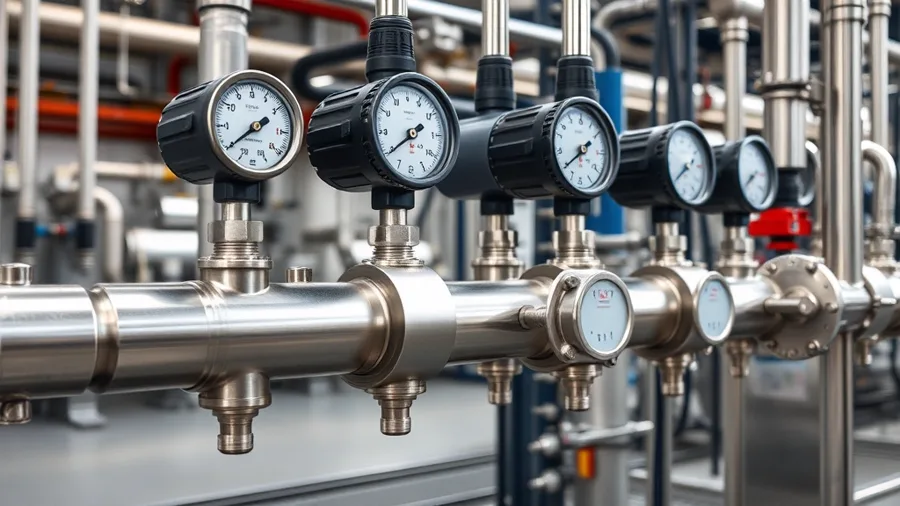
A proper instrumentation calibration is more than a quick bump test. The technician compares the instrument’s output against a known, traceable reference across its range — typically at several points (often 0%, 25%, 50%, 75%, and 100% of span) — and records the error at each. That multi-point check is what catches non-linear drift that a single-point spot test would miss.
The record from each instrumentation calibration captures the “as-found” condition before any adjustment and the “as-left” condition after. The as-found data is the part that protects you: it tells you how far the instrument had drifted while it was still in service, which is exactly the information an auditor or a quality investigation asks for. If an instrument is consistently found within tolerance cycle after cycle, that history is your evidence for extending its interval. If it is found out of tolerance, the as-found record tells you how long you may have been running on bad data — and whether any product, billing, or compliance numbers from that window need a second look.
Quarterly vs. reactive vs. annual
| Approach | Risk of bad data | Cost profile | Compliance fit | Downtime |
|---|---|---|---|---|
| Reactive (on failure) | High — drift runs undetected | Low labor, high failure cost | Poor — gaps in records | Unplanned outages |
| Annual | Moderate — long drift window | Low recurring | Adequate for stable loops | Planned, infrequent |
| Quarterly | Low — drift caught early | Moderate recurring | Strong — consistent records | Planned, predictable |
Annual calibration is fine for stable, non-critical instruments. Reactive is the worst of the three for anything that matters. Quarterly hits the balance for critical loops: short enough to catch drift before it costs you, predictable enough to plan around.
Why quarterly is the sweet spot for critical loops
A quarterly cadence works because it matches the timescale on which most process instruments actually drift. Three months is short enough that a drifting transmitter is caught while the error is still small, and long enough that you are not burning technician time on instruments that haven’t moved. Tie the instrumentation calibration interval to drift behavior, not the calendar out of habit. For the loops that drive control decisions, billing, or compliance, that window keeps measurement honest without over-servicing.
Not every instrument earns quarterly attention. The ones that usually do:
- Flow measurement tied to billing, chemical dosing, or mass balance.
- Pressure on safety-related or tight-control loops — see the ISA standards for measurement and control for how critical instruments are classified.
- Level in dirty or coating service, where buildup drives fast drift.
- Analytical sensors (pH, DO, chlorine, turbidity) that age and foul and directly feed treatment or compliance decisions.
A clean, stable temperature element in a non-critical loop does not need the same frequency. That is the point of risk-based scheduling.
Building a risk-based instrumentation calibration schedule
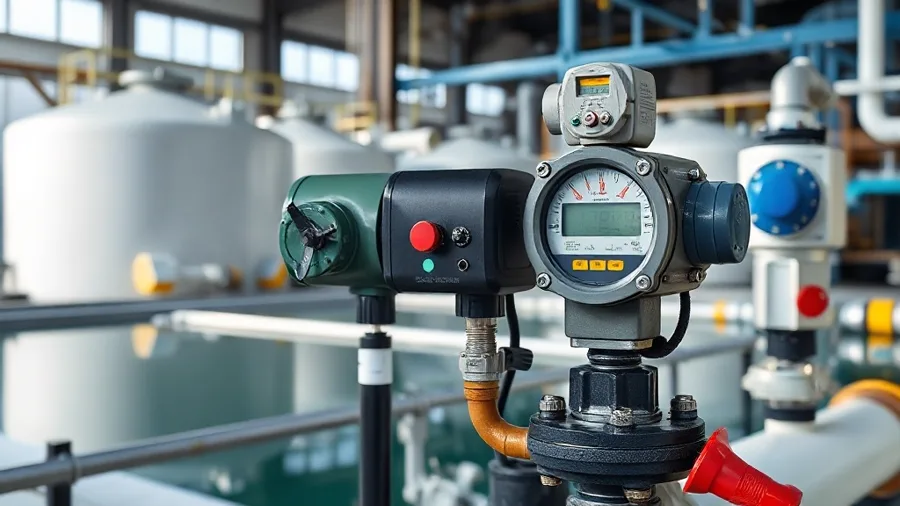
The goal of an instrumentation calibration program is not to calibrate everything quarterly — it is to calibrate the right instruments at the right interval. Sort your instruments into tiers:
- Tier 1 — critical: safety, compliance, billing, or tight-control loops. Quarterly.
- Tier 2 — important: affects efficiency or quality but not safety/compliance. Semiannual.
- Tier 3 — general: stable, non-critical monitoring. Annual.
For each instrument, weigh three factors: how fast it tends to drift (service conditions), how much its error costs (control, compliance, safety impact), and how stable its history has been. An instrument that has held calibration for several cycles can often move to a longer interval; one that drifts every check should move shorter or be investigated for a root cause. The schedule should live in your maintenance system with results trended over time, so the data — not habit — sets each interval. This is the same data discipline behind sound data collection and compliance in water treatment.
The compliance angle
For water, wastewater, and many process plants, calibration is not just good practice — it is part of staying audit-ready. Regulators expect measurement that is traceable, documented, and defensible. The EPA’s quality system and measurement requirements underpin the reporting many utilities submit, and that reporting is only as good as the instruments behind it.
A scheduled instrumentation calibration program produces what an audit asks for: a record of who calibrated what, when, against which traceable standard, with what result and what adjustment. Reactive calibration produces gaps. When an inspector asks for two years of calibration records on a compliance instrument, “we fixed it when it broke” is not an answer — a quarterly log is.
Frequently asked questions
How often should instruments be calibrated?
It depends on the instrument’s role and service. Critical loops — safety, compliance, billing, tight control — are commonly calibrated quarterly. Important-but-not-critical instruments often go semiannual, and stable, non-critical instruments annual. The right interval comes from the instrument’s drift history and the cost of its error, not a single blanket rule.
What is calibration drift?
Drift is the gradual change in an instrument’s output away from its true value over time, caused by temperature, process buildup, vibration, and sensor aging. It is usually silent — no alarm — which is why scheduled checks against a traceable reference are the only reliable way to catch it.
Is quarterly calibration always necessary?
No. Quarterly is the sweet spot for critical instruments, but over-calibrating stable, non-critical loops wastes time and money. A risk-based schedule assigns quarterly only to the instruments where early drift detection actually protects safety, compliance, or revenue, and lets proven-stable instruments move to a semiannual or annual interval. Let the calibration history of each instrument set the pace — tighten the interval on anything that keeps drifting, and extend it on anything that holds its accuracy cycle after cycle.
Schedule a calibration assessment with Pro-Tech
Pro-Tech Systems Group has supported instrumentation and control for water, wastewater, and process plants across the eastern US since 1986. If your calibration program is reactive — or you are not sure which instruments belong on a quarterly schedule — we can help you tier them and build the plan.
Call (330) 773-9828 or schedule a calibration assessment.