Data Collection in Water Treatment: 5 Ways to Automate Compliance
Data Collection in Water Treatment: 5 Ways to Automate Compliance
In the water and wastewater industry, data is more than just numbers on a screen; it is the proof of public safety. Accurate data collection in water treatment is the backbone of regulatory compliance, operational efficiency, and long-term asset management. Yet, many facilities still rely on clipboards, spreadsheets, and manual meter readings. This outdated approach introduces the risk of human error and makes reporting a tedious, time-consuming burden.
The future of the industry lies in automation. By digitizing data collection in water treatment processes through modern SCADA and IIoT systems, plant managers can turn raw numbers into actionable intelligence. This article explores five ways automated data strategies allow you to streamline compliance and optimize your facility.
Table of Contents
The Shift from Manual to Digital Data Collection
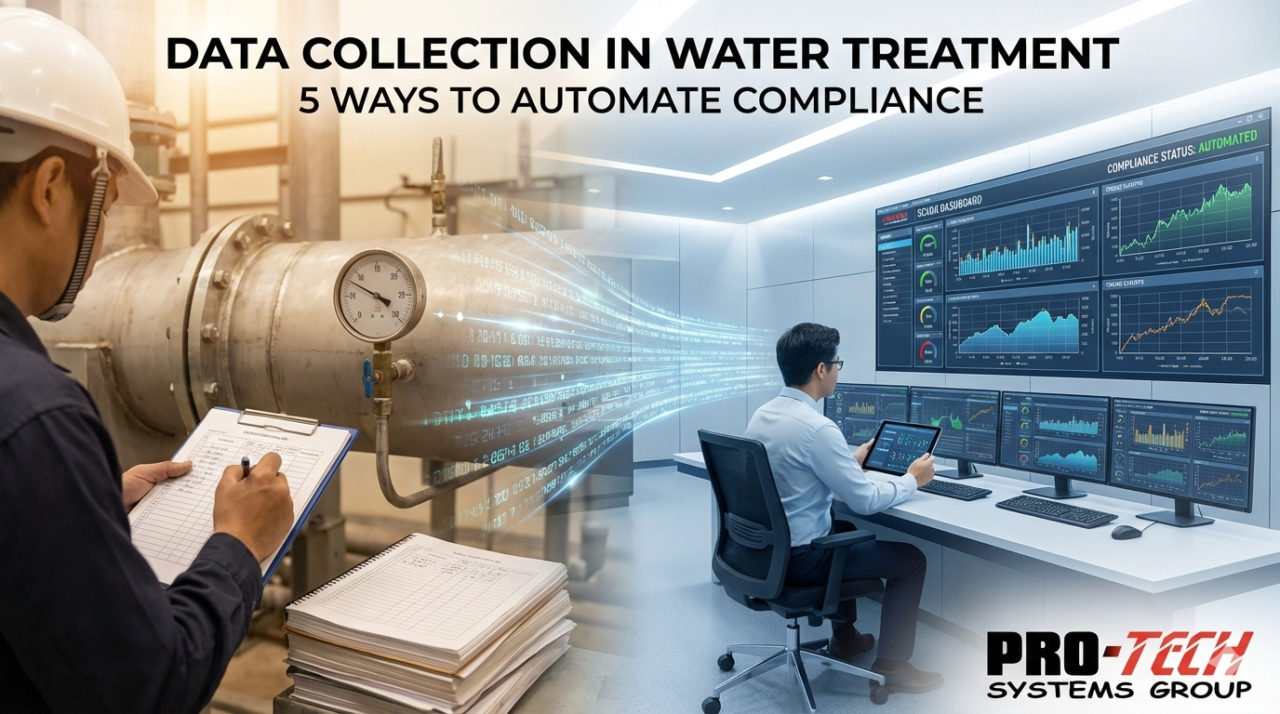
Historically, operators spent a significant portion of their shift walking the floor, reading gauges, and writing values into a logbook. While this ensures “eyes on equipment,” it is an inefficient method for data collection in water treatment. Handwriting can be illegible, readings can be missed, and spotting long-term trends from a stack of paper logs is nearly impossible.
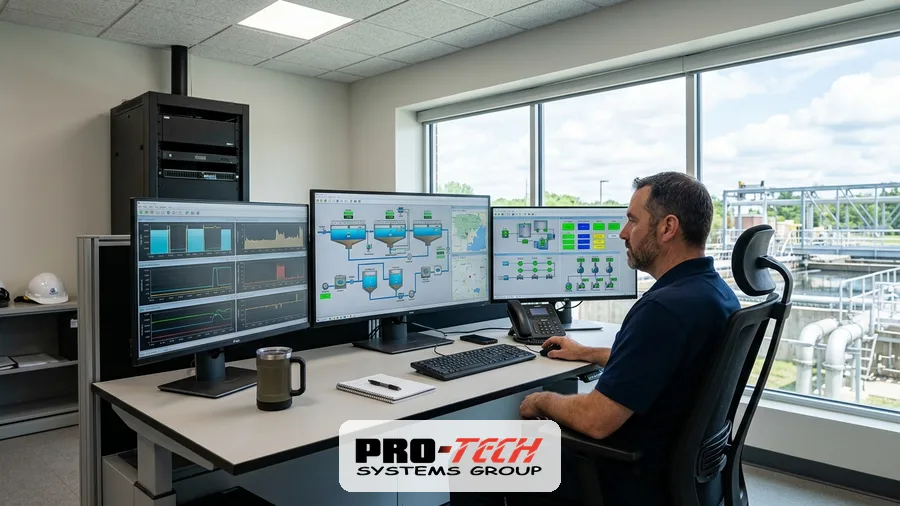
Modern automation changes the equation. By utilizing networked sensors and SCADA systems, data is logged continuously and automatically. This ensures that the record is not only permanent and legible but also accessible instantly for analysis.
5 Benefits of Automated Data Collection
1. Eliminating Human Error in Compliance Reporting
The EPA and state environmental agencies have zero tolerance for reporting errors. A misplaced decimal point or a missed turbidity reading can lead to audits and fines. Automated data collection in water treatment removes the human variable from the equation. Sensors transmit values directly to the historian database, ensuring that the data used for your Monthly Operating Reports (MORs) is exactly what was measured in the field. This level of accuracy is your best defense during a regulatory audit.
2. Real-Time Trend Analysis and Forecasting
Paper logs are reactive; you look at them after the day is done. Automated systems enable proactive management. With real-time data collection in water treatment, operators can see trends developing on their HMI screens instantly. For example, if chlorine residuals are slowly trending downward but are still within limits, the operator can adjust the dosage before a violation occurs. This proactive control is critical for maintaining water quality standards.
3. Optimizing Energy and Chemical Usage
Energy and chemicals are the two largest variable costs for any plant. Without granular data, you are likely overdosing chemicals or running pumps inefficiently “just to be safe.” Advanced data collection in water treatment allows you to pinpoint exactly how much energy a pump uses per million gallons moved. By analyzing this data, you can optimize pump schedules to run during off-peak electrical hours or fine-tune dosing loops to reduce chemical waste, leading to significant cost savings.
4. Improving Asset Management and Maintenance
How do you know when a motor needs service? Do you wait for it to fail? Automated data collection enables predictive maintenance. By continuously monitoring variables like vibration, temperature, and run-hours, the system can alert maintenance teams to wear and tear before a breakdown occurs. This data-driven approach allows you to move from emergency repairs to planned maintenance, extending the life of your expensive infrastructure.
5. Enhancing Security and Accountability
Data integrity is a security issue. In a manual system, logbooks can be altered or lost. A secure, digital system for data collection in water treatment provides an immutable audit trail. Every change to a setpoint, every alarm acknowledgement, and every login is recorded. This “digital paper trail” creates accountability and ensures that your facility’s data has not been tampered with, a key component of water plant security.

Key Technologies for Data Acquisition
Implementing these strategies requires the right hardware and software infrastructure.
- Smart Sensors: Upgrading to digital sensors that communicate via protocols like Ethernet/IP or Modbus allows for richer data transmission than simple analog 4-20mA loops.
- IIoT Gateways: For remote lift stations or wells, IIoT solutions can bridge the gap, sending data securely over cellular networks to the central plant.
- Historian Software: This is the vault where your data lives. A robust process historian (like those from Rockwell or Aveva) is essential for high-speed, long-term data collection in water treatment.
The Role of Standards (AWWA & EPA)
It is important to follow industry standards when designing your data architecture. Organizations like the American Water Works Association (AWWA) provide guidelines on information technology and data management. Adhering to these standards ensures that your data collection in water treatment system is interoperable, secure, and capable of meeting future regulatory requirements.
Partner with Pro-Tech to Digitize Your Facility
Transitioning from manual logs to a fully automated data ecosystem is a complex process. It requires deep knowledge of both water treatment processes and database architecture. Pro-Tech Systems Group specializes in designing custom data collection in water treatment solutions that make compliance automatic and effortless.
We help you choose the right sensors, design the network, and configure the reports, so your operators can focus on what they do best: producing clean, safe water.
Ready to eliminate the clipboard? Contact Pro-Tech today to discuss upgrading your facility’s data collection capabilities.
Related posts