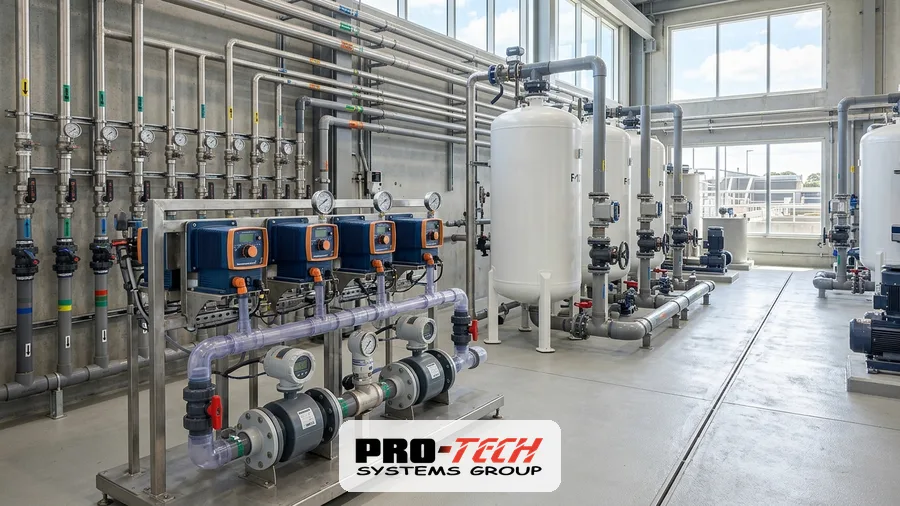
Key Takeaways for Water Utility SCADA Upgrades
- A modern municipal SCADA architecture eliminates single points of failure by deploying hot-standby redundant servers, fault-tolerant industrial networking, and automated failover.
- Legacy air-gapped systems leave utilities vulnerable to physical hardware obsolescence, loss of historical operational data, and unmonitored telemetry failures.
- Migrating to open, web-deployed supervisory platforms like Inductive Automation Ignition or modern Rockwell FactoryTalk provides unlimited operator clients without expensive per-seat licensing penalties.
- Automated compliance reporting software extracts data directly from process historians, streamlining EPA Safe Drinking Water Act documentation and eliminating manual clipboard logging.
- ProTech Systems Group Inc. engineers turnkey municipal control modernizations with UL 508A panel fabrication, certified Rockwell Silver Tier integration, and full source code ownership.
Operating a municipal SCADA water treatment plant requires absolute operational reliability around the clock. Water authorities and public utility directors are charged with protecting public health, maintaining strict water quality standards, and ensuring uninterrupted distribution to thousands of residential, commercial, and industrial consumers. At the heart of this critical mission is the supervisory control and data acquisition system.
However, across many municipalities, the supervisory infrastructure governing water treatment was installed fifteen or twenty years ago. Aging desktop computers running obsolete operating systems, proprietary serial radio links prone to weather dropouts, and unsupported software licenses represent severe operational risks. When a legacy human-machine interface (HMI) PC freezes or a remote pump station loses telemetry, operators are forced into manual crisis management.
Modernizing a SCADA water treatment plant is no longer just about pretty graphical screens. It is about building a resilient, cyber-secure, and future-proof operational backbone that empowers utility staff with real-time process intelligence. Below are the seven best upgrades modern water utilities implement to achieve bulletproof reliability.
Why Modernizing a SCADA Water Treatment Plant Is Essential in 2026
The primary motivation for upgrading a SCADA water treatment plant is eliminating single points of failure. In older municipal facilities, the entire control room often depends on a single server or workstation. If a hard drive crashes or an unpatched operating system corrupts during a power surge, the plant loses supervisory visibility immediately.
Additionally, regulatory compliance burdens have increased dramatically. State environmental protection agencies and the federal EPA drinking water regulations mandate rigorous record-keeping for turbidity, free chlorine residuals, pH levels, and filter backwash cycles. Relying on operators to transcribe numbers from paper charts into spreadsheets is slow, labor-intensive, and prone to transcription errors during audits. A modernized SCADA system automates compliance data collection continuously.
Finally, water utilities must protect critical physical infrastructure against escalating cyber threats. Outdated supervisory platforms operating on unsegmented networks violate modern federal security directives. Modern systems adhere to robust cybersecurity frameworks published by the American Water Works Association (AWWA), establishing encrypted communications, multifactor authentication, and secure remote telemetry.
7 Best Modern Upgrades for a SCADA Water Treatment Plant
1. Deploy Hot-Standby Redundant Server Architecture
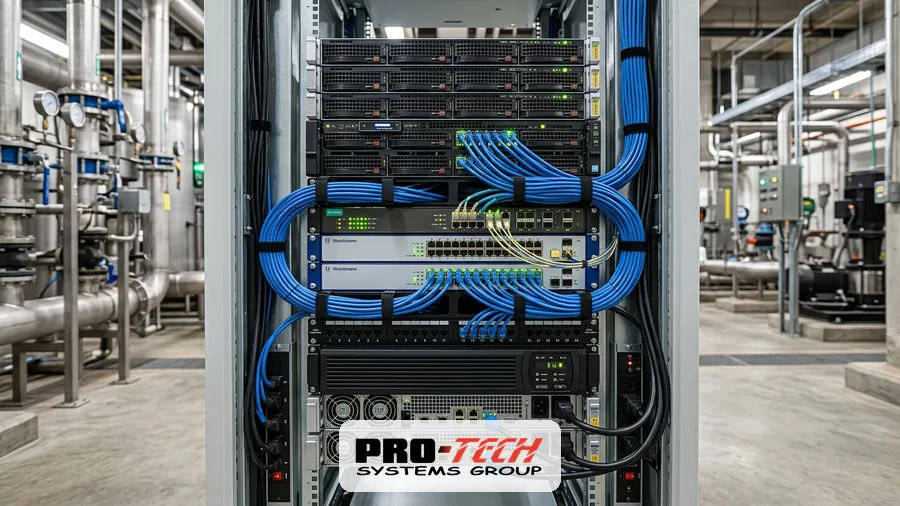
Unplanned control room downtime is intolerable in municipal drinking water distribution. A modern SCADA water treatment plant utilizes redundant, hot-standby servers operating in synchronized high-availability clusters.
In this architecture, primary and secondary servers continuously replicate real-time process tags, alarm states, and historian databases over dedicated fiber-optic interconnects. If the primary host experiences a hardware fault, power interruption, or network disconnect, the standby server assumes active control within milliseconds. Operators notice zero screen interruption, and field telemetry logging continues uninterrupted.
2. Migrate to Open-Architecture Web-Deployed Supervisory Platforms
Legacy supervisory software forced municipal utilities into restrictive, expensive licensing models based on tag counts and concurrent desktop client seats. Adding a workstation for a laboratory chemist or utility superintendent required thousands of dollars in license renewals.
Modern water utility upgrades favor modern, open-architecture platforms like Inductive Automation Ignition or modern Rockwell FactoryTalk Optix. These platforms offer unlimited client connections and unlimited tag databases on a single server license. Control displays run securely within standard web browsers on control room displays, rugged plant tablets, or administrative laptops, drastically lowering lifecycle software costs.
3. Upgrade to High-Performance HMI Graphics (ISA-101 Standards)
Older water plant screens are famous for visual clutter: bright flashing colors, 3D animated pipes, and spinning pump graphics that overwhelm operators during critical upsets. Modern upgrades adopt the ISA-101 standard for high-performance supervisory graphics.
High-performance graphics use muted grayscale backgrounds for normal operating conditions. Bright saturated colors (yellow, orange, and red) are strictly reserved for abnormal alarm states. Analog process variables are displayed using intuitive analog indicators showing normal operating bands, warning thresholds, and emergency trip limits. Operators can assess the health of clarifiers, chemical feeds, and high-service pumps in five seconds rather than five minutes.
4. Modernize Remote Telemetry with Cellular and Resilient Radio Networks
Municipal water distribution networks rely on remote pump stations, elevated storage tanks, pressure reducing valve (PRV) vaults, and booster stations scattered across vast geographic service territories. Legacy low-speed serial radios (licensed 450 MHz or 900 MHz spread spectrum) suffer from bandwidth constraints and terrain obstruction.
Modernizing your network telemetry infrastructure involves deploying private cellular modems (LTE/5G with static private IP tunnels) or high-throughput digital Ethernet radios utilizing lightweight MQTT or DNP3 protocols. These protocols support report-by-exception telemetry and local data buffering, ensuring that if a remote tower communication link temporarily drops, the remote RTU buffers all historical trends and backfills the central historian upon reconnection.
5. Integrate Automated EPA Compliance Reporting and Long-Term Historians
Regulatory audits require utilities to demonstrate continuous water quality compliance over multi-year periods. Relying on basic desktop spreadsheets is a significant liability.
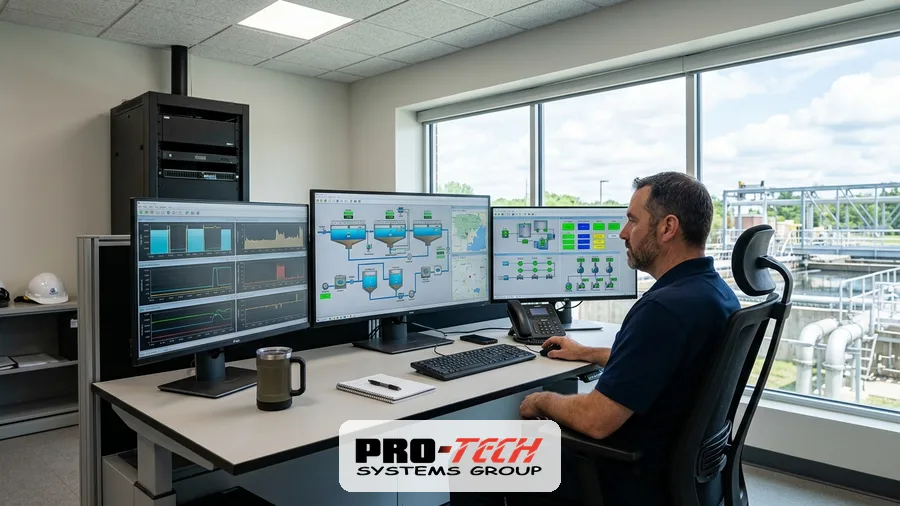
Upgrading a SCADA water treatment plant includes implementing an enterprise-grade time-series process historian capable of storing decades of high-resolution sensor data. Automated compliance reporting modules generate pre-formatted Daily Operating Reports (DORs) and Monthly Operating Reports (MORs) for state regulators automatically. Chemical dosing ratios, filter run hours, and distribution pressure trends are calculated and verified without manual intervention.
6. Build Resilient Control Panels with UL 508A Standards
Supervisory software is only as dependable as the physical hardware enclosures in the field. Corrosive atmospheres near chlorine storage rooms, coagulant feeding skids, and lime slurries rapidly degrade standard industrial components.
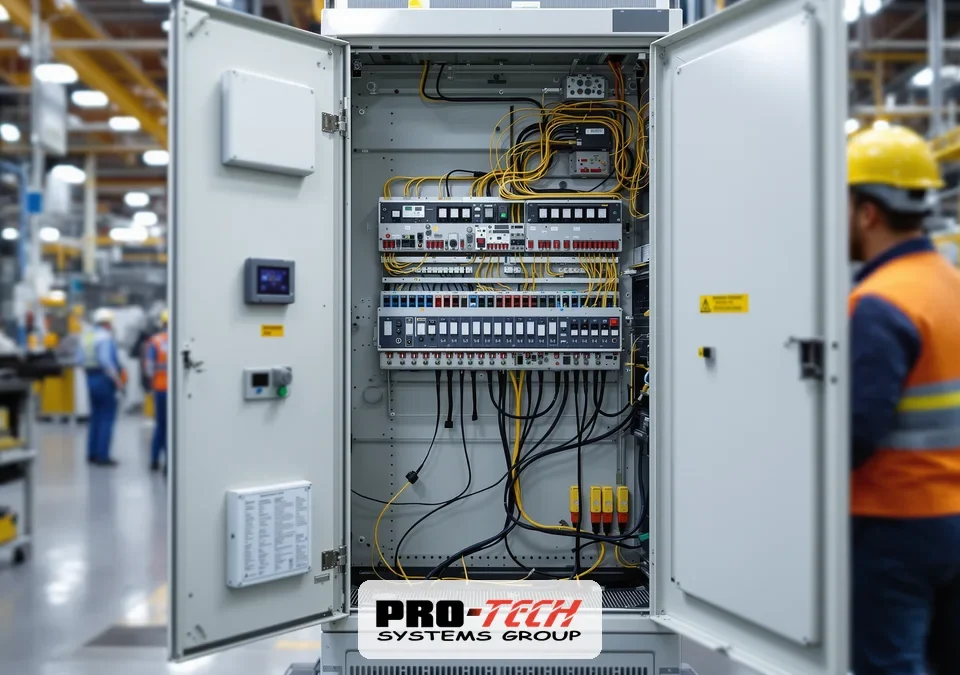
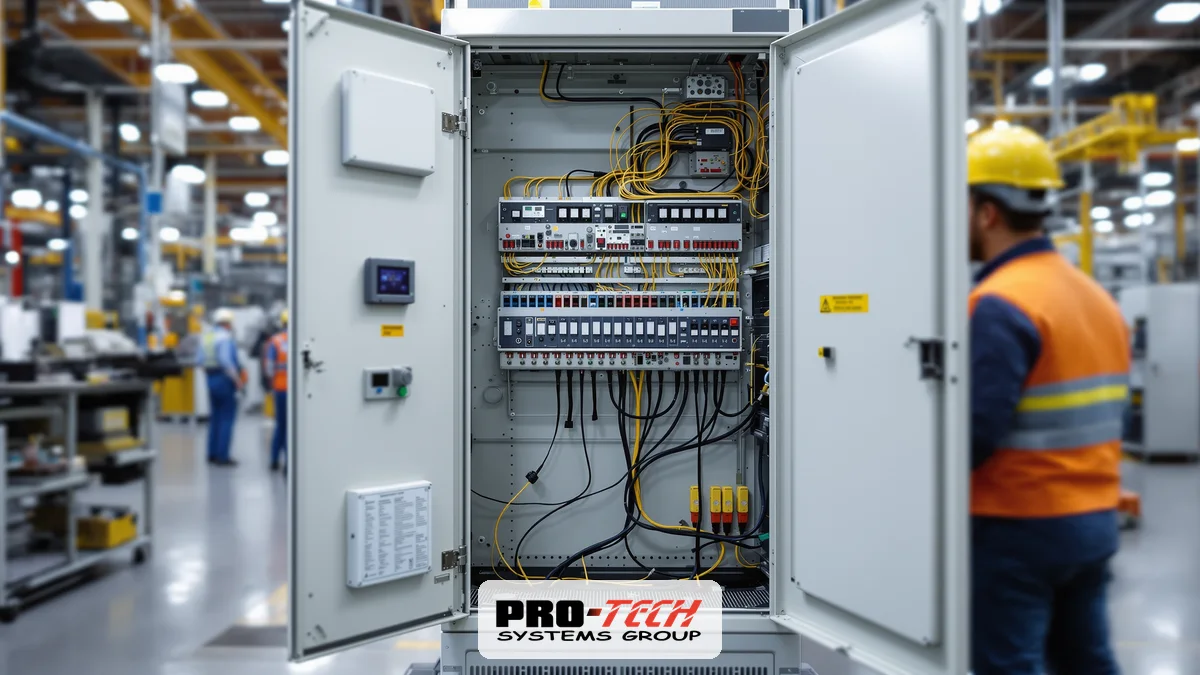
ProTech Systems Group Inc. fabricates custom, climate-controlled industrial enclosures at our dedicated UL 508A panel fabrication facility. Utilizing 316 stainless steel or fiberglass NEMA 4X enclosures, closed-loop air conditioners, and isolated purge systems protects modern programmable automation controllers from harsh chemical environments.
7. Implement Defense-in-Depth Industrial Cybersecurity
Federal cybersecurity directives from CISA and EPA have placed municipal water utilities in the crosshairs of cyber compliance. Connecting legacy systems directly to enterprise municipal networks creates dangerous vulnerabilities.
A professional upgrade establishes strict network segmentation based on the ISA/IEC 62443 standard. Implementing industrial firewalls, demilitarized zones (DMZ), hardware-enforced data diodes, and multi-factor authentication (MFA) allows authorized engineers to access secure remote diagnostics without exposing critical chemical dosing controls to public internet threats.
Evaluating Legacy vs Modern Water Treatment SCADA Platforms
| System Feature | Legacy Water Plant SCADA | Modern SCADA Architecture |
|---|---|---|
| Server Redundancy | Single PC workstation (high failure risk) | Automated hot-standby synchronized server pair |
| Client Licensing | Per-seat client fees; locked to specific PCs | Unlimited web browser / mobile client sessions |
| Remote Telemetry | Slow serial polling; frequent packet loss | High-speed MQTT / DNP3 with local data buffering |
| Operator Interface | Cluttered 3D animations and flashing colors | ISA-101 high-performance situational awareness |
| Compliance Reporting | Manual clipboard logging and Excel spreadsheets | Automated EPA report generation and audit logging |
| Cybersecurity | Air-gap assumption; no encryption or MFA | ISA/IEC 62443 compliance, DMZ, role-based access |
Why Municipal Water Authorities Choose ProTech Systems Group Inc.
ProTech Systems Group Inc. has served as an independent controls and information systems integrator for municipal and industrial utilities across Ohio and the Midwest since 1986. As an experienced SCADA system integrator, we understand that municipal water plants cannot simply shut down for a week to install new technology.
Our engineering team plans phased cutovers that allow existing water plants to maintain continuous water production throughout the modernization process. From raw water intake to distribution booster stations, we deliver robust, open-architecture industrial control systems backed by local 24/7 technical support.
Frequently Asked Questions About Water Treatment SCADA Systems
How long does a full SCADA water treatment plant upgrade take?
A comprehensive municipal SCADA water treatment plant upgrade typically takes between four and eight months from initial engineering audit to final on-site commissioning. However, by utilizing phased migrations, the actual physical cutover of individual filter banks and pump stations occurs during controlled, scheduled windows of four to eight hours with zero disruption to public water delivery.
Can modern SCADA integrate with our existing field PLCs and instruments?
Yes. Modern supervisory platforms support open communications standards such as OPC UA, Modbus TCP, and Ethernet/IP, enabling seamless communication with existing Allen-Bradley, Modicon, or Siemens controllers while allowing you to modernize processors gradually over multiple fiscal budget cycles.
What are the new EPA cybersecurity requirements for municipal water systems?
The EPA and CISA mandate that water utilities conduct regular risk and resilience assessments, enforce multi-factor authentication on all remote access connections, segment operational technology (OT) from municipal IT networks, and maintain tested offline backups of all control logic.