Key Takeaways for Bulk Water Station Design
- Transitioning from manual hydrants to modern automated bulk water dispensing stations eliminates non-revenue water loss, prevents water theft, and captures 24/7 commercial revenue.
- High-accuracy electromagnetic flow meters (magmeters) provide revenue-grade measurement across flow rates from 50 to 800 gallons per minute without moving parts subject to mechanical wear.
- Cloud-managed billing terminals accept commercial credit cards, contactless mobile pay, and prepaid customer PIN accounts, automatically generating billing statements and reconciling water sales.
- Engineered backflow prevention (reduced pressure zone assemblies or physical air gaps) protects the municipal drinking water supply against chemical contamination from haulage tankers.
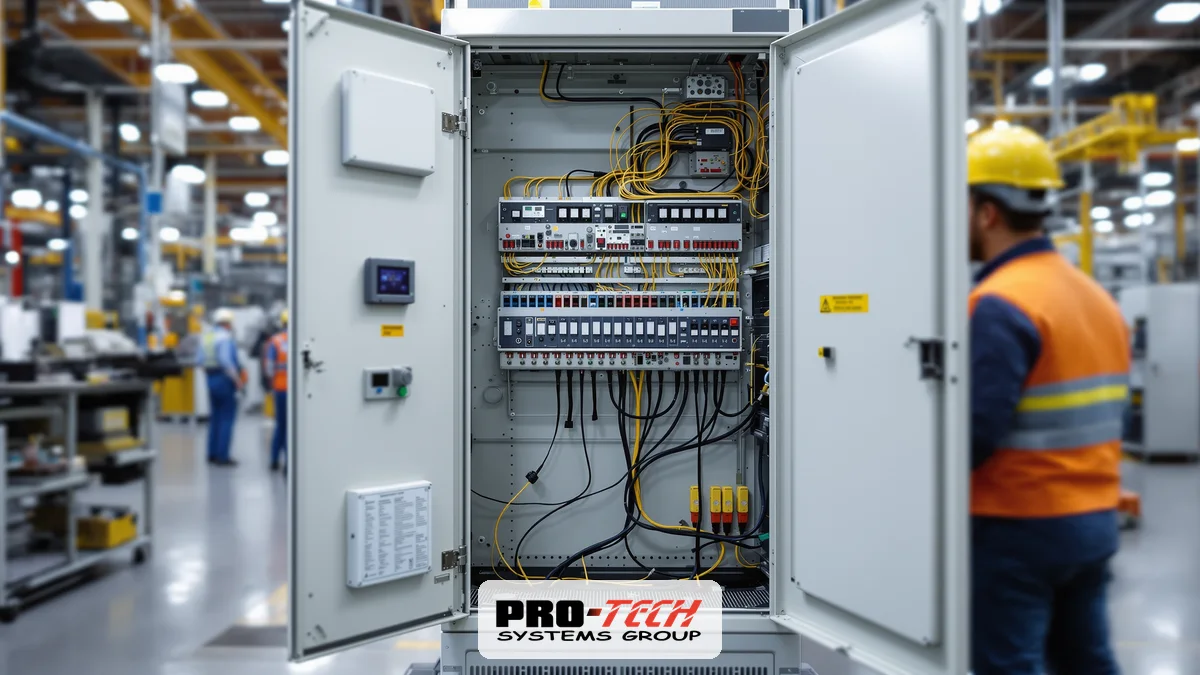
- Pro-Tech Systems Group engineers custom, pre-packaged bulk water dispensing skids with UL 508A enclosures, automated freeze protection, and full SCADA telemetry integration.
Investing in modern automated bulk water dispensing stations transforms municipal utility operations, turning unmetered hydrant withdrawals into secure, profitable 24/7 commercial revenue. Municipal water authorities and public utility districts face increasing demand for bulk potable water from commercial water haulers, swimming pool fillers, hydro-excavation contractors, and agricultural operations. Historically, managing these transactions involved manual paper logbooks, honor-system hydrant meters, or easily vandalized coin-operated dispensers. These outdated approaches create significant revenue leakage, inaccurate billing disputes, and serious cross-contamination hazards.
Modern unattended 24/7 dispensing terminals allow commercial haulers and local residents to purchase water rapidly and safely while utility staff track every gallon sold in real time from the municipal office. By automating credit card processing, account management, and valve actuation, utilities eliminate manual administrative overhead and capture accurate revenue around the clock.
However, designing an industrial-grade dispensing depot requires careful engineering coordination across mechanical flow control, electrical safety, payment processing, and freeze protection. Below are the seven best proven design strategies utilities use to build dependable bulk water depots.
Why Municipalities Invest in Automated Bulk Water Dispensing
The primary financial justification for modern automated bulk water dispensing is the recovery of non-revenue water. Water utilities invest significant capital into treating raw water to municipal drinking standards. When bulk water is distributed through unmonitored hydrants or failing mechanical meters, thousands of gallons go unaccounted for each month. According to data from the American Water Works Association water loss control guidelines, unmetered withdrawals severely undermine utility revenue recovery.
Automating the dispensing depot eliminates administrative overhead entirely. Instead of utility personnel spending hours reconciling manual slips, handling cash, or collecting quarters from coin boxes, modern transaction software automatically charges credit cards or debits prepaid account balances. Revenue is deposited directly into utility accounts with automated monthly invoicing.
Most importantly, modern stations safeguard public health. Filling water tanker trucks directly from street hydrants introduces catastrophic back-siphonage risks. If a tanker truck containing residual chemicals, fertilizer, or non-potable water experiences a sudden pressure drop, contaminated water can be sucked directly into the municipal distribution mains. Automated dispensing depots incorporate certified cross-connection control to guarantee water safety.
7 Best Proven Designs for Automated Bulk Water Dispensing
1. Deploy Electromagnetic Flow Meters for Revenue-Grade Accuracy
Traditional turbine or positive displacement water meters contain moving impellers and mechanical gears. In bulk water applications, high flow rates and sudden valve closures subject mechanical meters to severe wear, leading to measurement drift and revenue loss.
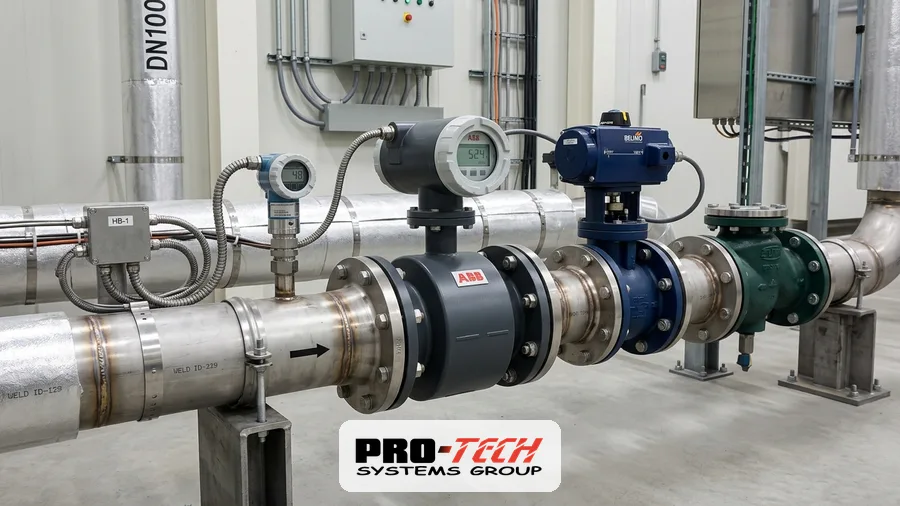
Modern automated bulk water dispensing stations utilize electromagnetic flow meters (magmeters). Magmeters feature an open flow tube with zero moving parts, measuring velocity via Faraday’s Law of electromagnetic induction. They deliver 0.2% measurement accuracy, remain unaffected by suspended solids, and eliminate head loss. Pairing magmeters with certified NSF/ANSI 61 drinking water component standards ensures total compliance with public health mandates.
2. Integrate Rugged Outdoor Payment Kiosks and Smart Terminal Controls
The user interface must withstand harsh Ohio winter weather, direct summer UV radiation, and heavy commercial use. The dispensing kiosk must be intuitive for drivers wearing work gloves while providing secure transaction encryption.
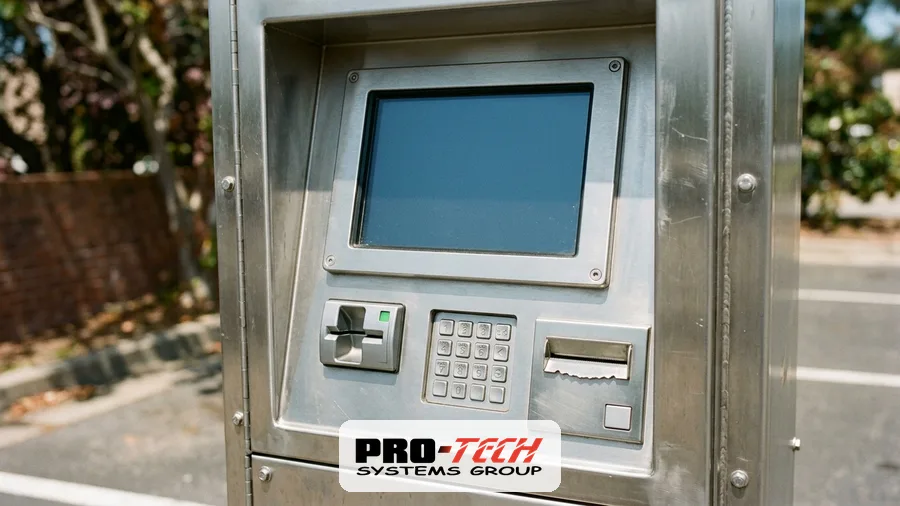
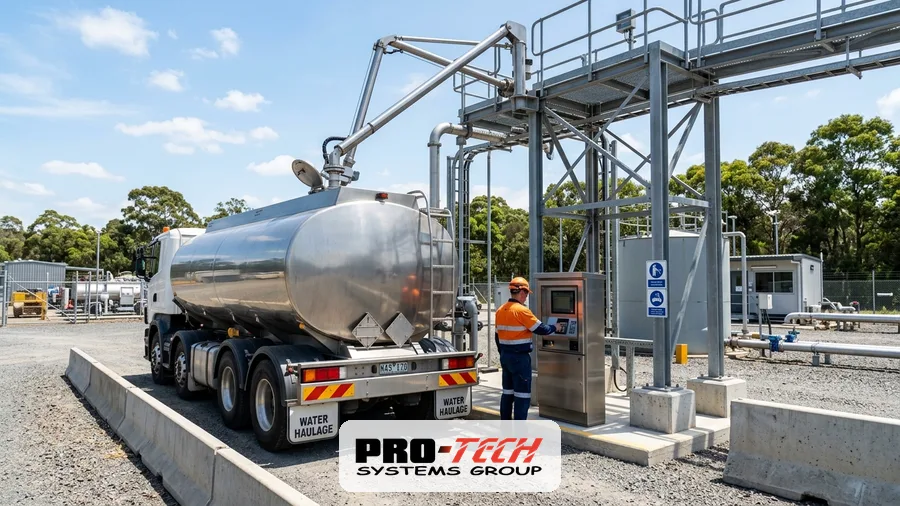
Pro-Tech Systems Group designs heavy-gauge stainless steel kiosks featuring sunlight-readable graphic displays, weather-sealed PIN keypads, and EMV-compliant credit card readers. Stations can accept tap-to-pay mobile wallets (Apple Pay, Google Pay), commercial credit cards, or prepaid customer access codes. The local controller enforces credit limits, auto-terminates dispensing if communication fails, and prints or emails receipts instantly.
3. Incorporate Certified Cross-Connection and Backflow Prevention
Protecting the municipal water grid from backflow is the single most critical engineering requirement in bulk station design. State plumbing codes strictly mandate cross-connection protection on all bulk filling connections.
Depending on local regulations, station designs utilize either an approved Reduced Pressure Zone (RPZ) backflow preventer assembly or a physical air gap overhead fill arm. RPZ assemblies are installed within heated, drain-equipped enclosures with differential pressure monitoring. For top-loading tanker trucks, engineered overhead boom arms maintain a certified atmospheric air gap above the truck hatch, physically preventing any possibility of back-siphonage.
4. Engineer Climate-Controlled Enclosures with Automated Freeze Protection
In northern climates, frozen plumbing lines cause expensive valve ruptures and shut down bulk dispensing during peak winter construction. Dependable automated bulk water dispensing stations require robust thermal engineering.
Pro-Tech Systems Group houses the control panel in a NEMA 4X enclosure that is heated and ventilated as standard, which is what allows it to be mounted outdoors. Where the site calls for it, the station can instead be built inside an insulated building, and the panel can be mounted indoors or outdoors depending on what the utility prefers. Outdoor overhead and side-fill delivery arms incorporate automated drain-down solenoid valves. The moment dispensing terminates, those valves vent the exposed discharge pipe, draining residual water to prevent ice formation.
5. Specify a Slow-Closing Control Valve to Prevent Water Hammer
Closing a large valve abruptly against a full fill generates severe hydraulic shock waves, known as water hammer. Water hammer can rupture buried municipal water mains, damage delicate backflow assemblies, and shake station piping apart.
The station’s control system opens and closes the fill valve rather than throttling it, and the pressure in the feed line sets how fast the truck fills. That makes the valve itself the component protecting the plumbing, so its closing characteristics matter to the design. Pro-Tech Systems Group supplies the control valve as part of the station.
6. Implement Cloud-Based Customer Management and Accounting Software
Modern stations connect to secure cloud-based administrative portals, giving municipal utility staff complete visibility over operations from any web browser:
- Prepaid Account Portals: Commercial haulers can log in online to deposit funds via ACH or credit card, manage driver PIN numbers, and review fill histories.
- Dynamic Tiered Rate Structures: Utilities can establish different volumetric rate tiers for residential consumers, commercial haulers, and emergency agricultural accounts.
- Automated Invoicing: Eliminate paper accounting by exporting transaction ledgers directly into municipal billing software.
Learn more about our custom municipal bulk water filling station solutions engineered for complete financial accountability.
7. Seamless Telemetry Integration with Municipal SCADA Networks
A bulk water station should never exist as an isolated island of automation. Integrating the depot with your central SCADA architecture provides immediate visibility into daily pump demand and system pressure impacts.
Pro-Tech Systems Group installs secure cellular or fiber network links that report water flow rates, totalizer readings, storage tank levels, building temperature alarms, and door intrusion sensors directly to the main water plant control room. If an unauthorized attempt is made to open the enclosure or if heating fails in freezing weather, plant operators receive instant alarm notifications.
Comparing Bulk Water Methods: Manual Hydrants vs Automated Stations
| Operational Feature | Manual Hydrant Meters | Automated Dispensing Station |
|---|---|---|
| Operating Hours | Restricted to public works business hours | 24/7/365 unattended commercial access |
| Payment Methods | Monthly paper invoicing or cash/checks | Credit card, mobile wallet, prepaid PIN portal |
| Flow Measurement Accuracy | Mechanical meters prone to drift (3% – 5% error) | High-accuracy magmeters (0.2% revenue grade) |
| Backflow Contamination Risk | Severe hazard; direct hose connection to main | Certified RPZ backflow preventer or air gap boom |
| Water Hammer Prevention | Manual fast-closing valves cause pressure surges | PLC-controlled slow ramp and cushioned shutoff |
| Winter Operation | Prone to freezing; requires manual draining | Automated self-draining pipes and heated skids |
Why Partner with Pro-Tech Systems Group for Bulk Water Stations
Pro-Tech Systems Group engineers complete, turnkey bulk water solutions for municipal water departments and private water suppliers throughout Ohio and surrounding states. Operating since 1986, our team handles every aspect of the project: mechanical piping design, RPZ backflow integration, UL 508A control panel fabrication, payment software deployment, and ongoing technical support.
Whether you need a standalone single-hose municipal dispensing kiosk or a high-capacity multi-bay commercial filling terminal with overhead truck fill booms, we deliver rugged, reliable industrial control systems built to last for decades.
Frequently Asked Questions About Automated Bulk Water Dispensing
How do commercial haulers pay for water at an automated bulk station?
Commercial haulers can pay directly at the kiosk terminal using standard credit cards or mobile tap-to-pay (Apple Pay/Google Pay). Alternatively, regular commercial customers can maintain prepaid utility accounts accessed via a secure 4-digit PIN or RFID key fob, allowing utilities to offer discounted commercial volume pricing.
What flow rate can an automated bulk water dispensing station deliver?
The station does not set the fill rate. Pro-Tech Systems Group’s control system opens and closes the fill valve and meters what passes through it, so the pressure in your feed line dictates how quickly a truck fills. Throughput therefore depends on your existing main and line size rather than on a fixed rating, and each station is built to suit the site.
How does the station prevent freezing during harsh winter temperatures?
The control panel ships in a NEMA 4X enclosure that is heated and ventilated, which is what lets it sit outdoors through an Ohio winter. Where a site calls for it, the station can instead be built inside an insulated building, and the panel can be mounted indoors or outdoors depending on what the utility prefers. External loading arms incorporate drain-down valves that evacuate standing water from the delivery pipe after each dispensing cycle.