PLC, SCADA, and DCS: Can These Systems Work Together?
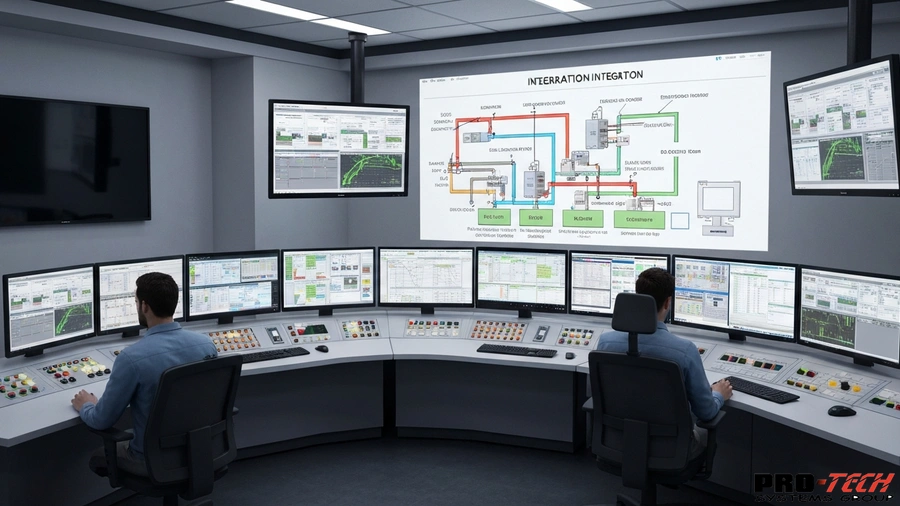
PLC, SCADA, and DCS: Can These Systems Work Together?
In today’s complex industrial environments, automation is the cornerstone of productivity, safety, and efficiency. Many organizations—especially in manufacturing, energy, water treatment, and oil & gas—rely on a combination of PLC SCADA and DCS systems. While each of these technologies has unique strengths, many decision-makers wonder: Can PLC, SCADA, and DCS systems work together?
The short answer is yes—and not only can they work together, but when properly integrated, they can maximize operational efficiency, improve control, and reduce downtime across facilities.
This blog is designed to help business leaders, plant managers, and IT/OT professionals understand how these systems differ, where they overlap, and most importantly, how to integrate them effectively into a hybrid automation environment.
Table of contents
- PLC, SCADA, and DCS: Can These Systems Work Together?
- Understanding the Basics: PLC vs. SCADA vs. DCS
- Why Integrate PLC , SCADA and DCS Systems?
- Real-World Example: Hybrid Automation in Action
- PLC SCADA and DCS Systems: What’s the Difference?
- How to Integrate PLC SCADA and DCS Systems: A Step-by-Step Guide
- Challenges and How to Overcome Them
- Who Should Consider Integration?
- The Future of Hybrid Automation Environments
Understanding the Basics: PLC vs. SCADA vs. DCS
Before diving into integration strategies, it’s essential to understand the fundamental roles of each system.
What is a PLC (Programmable Logic Controller)?
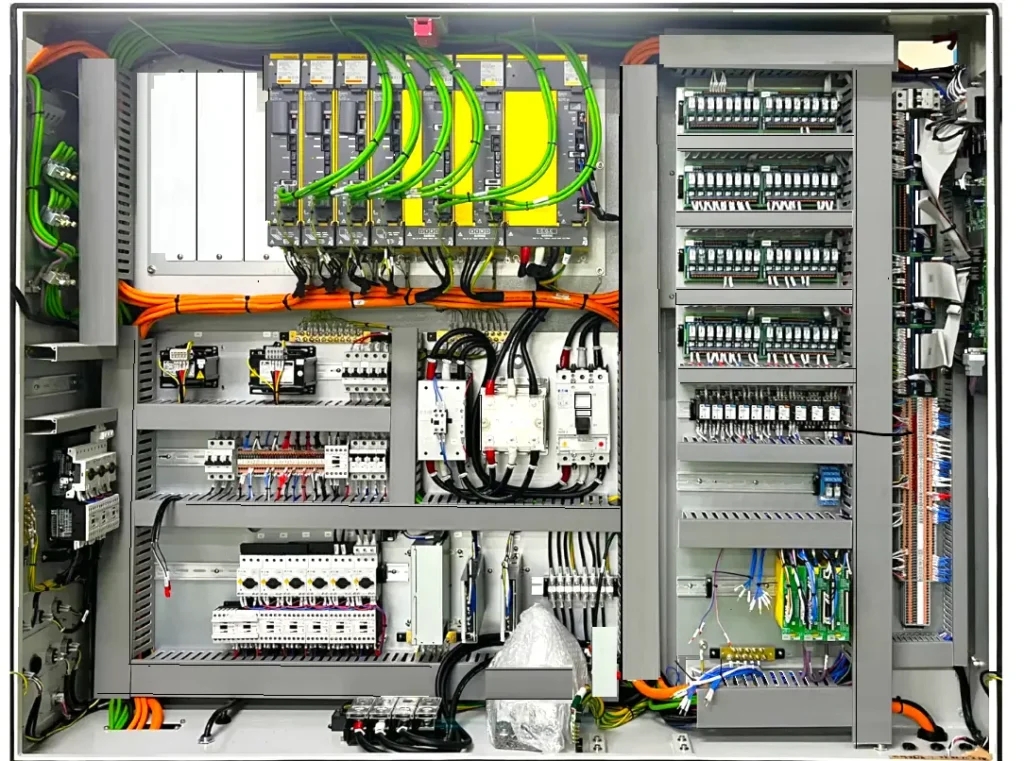
PLCs are industrial computers designed to automate discrete tasks, such as starting/stopping machinery, managing alarms, and controlling valves or motors. They’re:
Highly reliable
Fast-response
Ideal for repetitive tasks
Common in batch processing and machinery control
What is a DCS (Distributed Control System)?
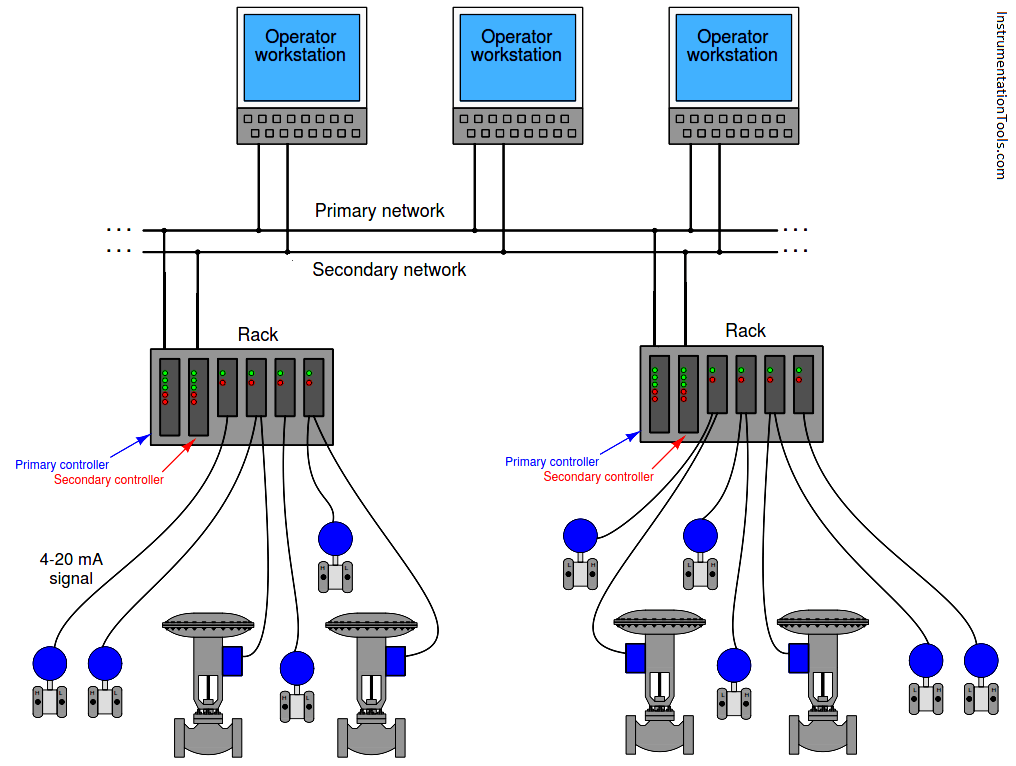
A DCS is a centralized control system used to monitor and control complex, continuous processes such as those found in:
Chemical processing
Power generation
Oil refining
DCS systems distribute control functions across multiple nodes and offer tight loop control, often with built-in redundancy.
What is SCADA (Supervisory Control and Data Acquisition)?
SCADA is a high-level software system designed to:
Monitor real-time data
Control remote or geographically dispersed assets
Aggregate and display data through HMIs (Human Machine Interfaces)
Trigger alarms and generate reports
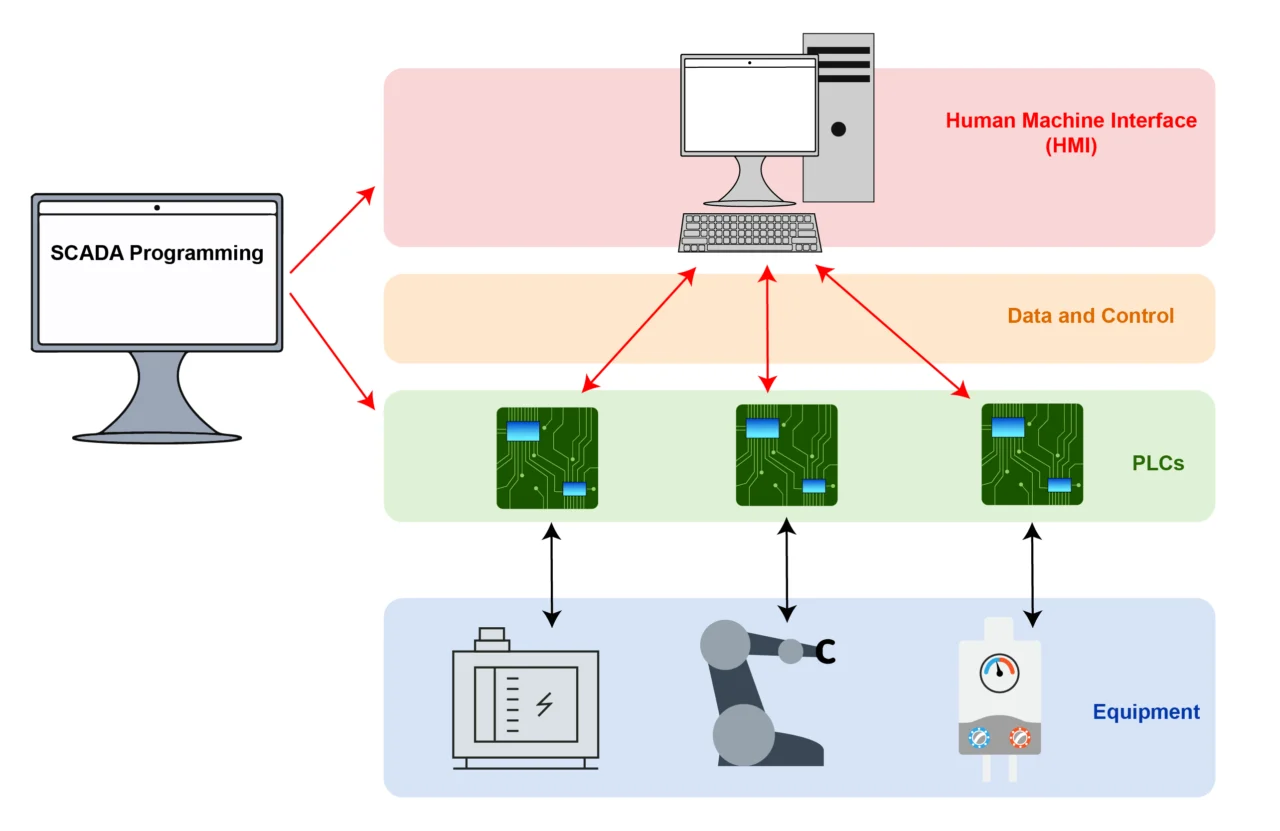
SCADA systems typically sit above PLCs or RTUs (Remote Terminal Units), collecting and visualizing data without executing fine-grained control logic like a DCS or PLC.
Why Integrate PLC , SCADA and DCS Systems?
Businesses that use all three often do so to capitalize on their individual strengths. Integration helps:
Unify data visibility across the plant
Enable centralized control and decision-making
Reduce redundancy in monitoring and control
Streamline maintenance and support
Key Integration Benefits:
Operational Efficiency:
A SCADA system visualizing both PLC and DCS data helps operators quickly diagnose problems and make informed decisions.Cost Reduction:
Centralized monitoring reduces the need for multiple HMIs and control interfaces across different vendors.Scalability:
New PLCs can be easily added into a SCADA interface without disrupting DCS functions.Improved Safety:
Unified alarms and fault tracking reduce the chance of oversight in hazardous environments.
Real-World Example: Hybrid Automation in Action
A water treatment facility uses:
PLCs to automate pump start/stop cycles
DCS to control the chemical dosing process
SCADA to monitor tank levels, flow rates, and system-wide alarms
The SCADA system consolidates all the data into a central dashboard, allowing a small team to monitor operations across multiple stations in real time—even remotely. This integration significantly reduces manual inspection and improves response times.
PLC SCADA and DCS Systems: What’s the Difference?
| Feature | PLC | DCS | SCADA |
|---|---|---|---|
| Primary Function | Machine/process control | Continuous process control | Data acquisition & visualization |
| Control Type | Discrete logic | Analog & continuous control | Supervisory only |
| Ideal Use Case | Equipment-level control | Plant-wide coordination | Remote site monitoring |
| Redundancy | Limited (vendor specific) | High | Depends on architecture |
| Real-Time Data | Yes | Yes | Yes |
| Visualization | Basic | Integrated | Advanced HMI dashboards |
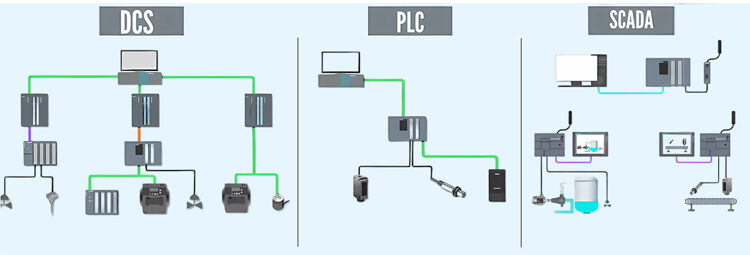
PLCs control specific machines, DCS manages entire continuous processes, and SCADA supervises multiple systems across sites. Each serves a role—and together, they create a powerful, layered control environment.
How to Integrate PLC SCADA and DCS Systems: A Step-by-Step Guide
1. Map Out Your Automation Architecture
Create a full architecture map of your existing automation assets. Identify:
All PLCs (brands, models)
DCS platforms and software versions
SCADA platforms in use
Communication protocols (MODBUS, OPC UA, Ethernet/IP)
2. Choose the Right Integration Protocols
Ensure that all systems speak the same “language” or have translators (gateways) in place.
Common protocols:
OPC UA/DA: The most widely supported protocol for vendor-agnostic integration.
MODBUS TCP/IP: Simple, reliable, but limited in features.
Ethernet/IP and Profinet: Common in PLC networks.
Tip: Use protocol converters or middleware to bridge systems that don’t natively communicate.
3. Standardize Tags and Naming Conventions
To avoid confusion and errors in SCADA visualization:
Use consistent tag names across PLCs and DCS nodes.
Document your naming conventions.
Ensure every variable (pressure, temperature, speed) is clearly defined.
4. Implement Centralized HMI Dashboards
The SCADA layer should display real-time data from both the PLCs and DCS nodes using:
Graphs
Alarms
Control buttons
Historical trends
Use role-based access control (RBAC) to secure critical control functions.
5. Establish Data Logging and Reporting Standards
Store unified data from PLC SCADA and DCS systems in a centralized historian database. This:
Improves reporting accuracy
Aids in predictive maintenance
Enables better regulatory compliance
6. Conduct Integration Testing and Training
Run simulations with test data.
Perform fault injection to see how systems respond.
Train operators and engineers on the hybrid interface.
Challenges and How to Overcome Them
1. Vendor Lock-In
Some DCS and PLC vendors use proprietary protocols that resist third-party integration.
Solution: Choose platforms that support open standards (OPC UA, MQTT) or use protocol gateways.
2. Cybersecurity Risks
Integrated systems are more interconnected and therefore more vulnerable.
Solution: Implement network segmentation, secure remote access (VPN with MFA), and intrusion detection systems (IDS).
3. Data Overload
Pulling too much real-time data into SCADA can overwhelm your system.
Solution: Use edge computing or data filters to prioritize only actionable data.
Who Should Consider Integration?
Facilities modernizing legacy systems with newer PLCs or SCADA platforms
Enterprises merging plants that use different automation technologies
Operations with remote sites that need centralized monitoring
Industries requiring high uptime and real-time visibility, such as food & beverage, oil & gas, utilities, and manufacturing
The Future of Hybrid Automation Environments
As AI, machine learning, and cloud analytics continue to evolve, hybrid systems that combine PLC SCADA and DCS systems will become the standard rather than the exception.
Expect:
AI-powered anomaly detection
Digital twins for predictive control
Cross-platform analytics dashboards
Secure remote SCADA access over 5G
Organizations that embrace integration now will be better prepared for Industry 4.0 and beyond.
PLC SCADA and DCS systems each offer unique capabilities, but when used together in a strategically integrated architecture, they enable real-time control, visibility, and efficiency across even the most complex industrial environments.
For business leaders and plant managers, understanding the integration possibilities and best practices can help future-proof operations, reduce costs, and improve decision-making. In the world of industrial automation, collaboration between systems isn’t just possible—it’s powerful.