AI in SCADA: 5 Revolutionary Ways to Transform Control Systems
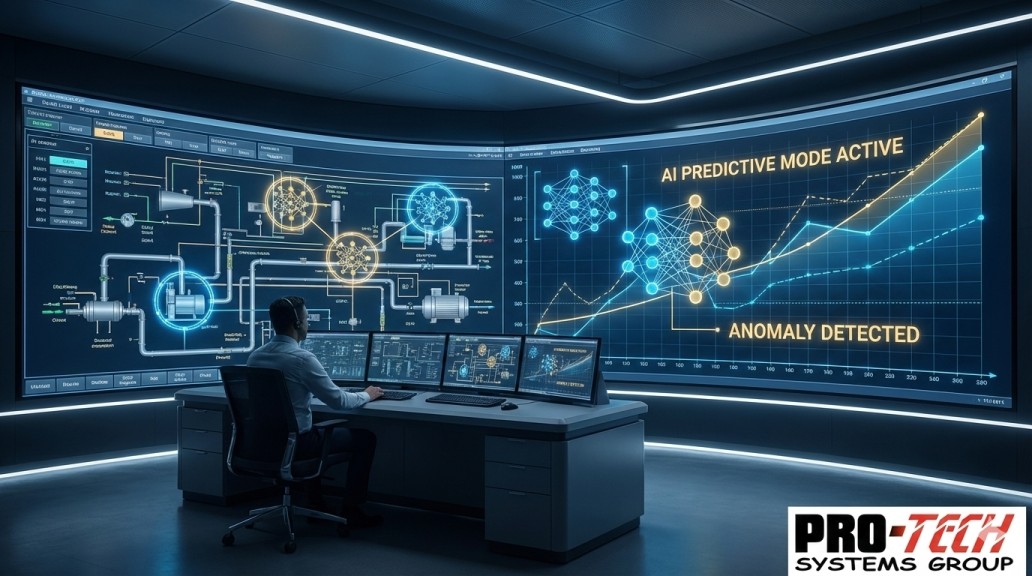
For decades, Supervisory Control and Data Acquisition (SCADA) systems have been the reliable eyes and ears of the industrial world. They monitor status, collect data, and alert operators to problems. However, traditional systems have a limitation: they are reactive. They tell you what is happening now, or what happened in the past. The integration of AI in SCADA is changing this paradigm entirely, shifting industrial operations from passive monitoring to active, intelligent prediction.
By embedding Artificial Intelligence and Machine Learning algorithms into control architectures, we are unlocking a new era of efficiency. AI in SCADA empowers operators to see around corners, predict failures, and optimize complex processes in real-time. In this article, we explore the five revolutionary ways this technology is transforming the factory floor.
Table of Contents
From Passive Monitoring to Intelligent Control
To understand the impact of AI in SCADA, we must look at how data is handled. Traditional SCADA systems are excellent at data acquisition—gathering millions of data points from PLCs and RTUs. However, interpreting that data relies heavily on human operators who can easily become overwhelmed.
Artificial Intelligence acts as a force multiplier. It doesn’t replace the SCADA system; it supercharges it. By analyzing historical data alongside real-time inputs, AI identifies subtle patterns and correlations that are invisible to the human eye. This allows for smarter decisions and faster responses, a concept often referred to as “Industrial AI.” According to the International Society of Automation (ISA), this convergence of OT data and IT intelligence is the defining characteristic of the future of manufacturing.
5 Revolutionary Benefits of AI in SCADA
1. Solving the “Alarm Fatigue” Crisis
One of the biggest challenges in modern control rooms is alarm fatigue. When a minor upset occurs, a traditional SCADA system might trigger hundreds of cascading alarms, overwhelming the operator and obscuring the root cause. AI in SCADA solves this through intelligent alarm rationalization. Machine learning algorithms can group related alarms, suppress nuisance alerts, and identify the single root cause of the disturbance. This ensures operators only see what matters, reducing reaction time and preventing errors.
2. Predictive Maintenance (Forecasting the Future)
Traditional maintenance is based on schedules or reacting to failures. AI in SCADA enables true predictive maintenance. By continuously monitoring variables like vibration, temperature, and current draw, the system learns the “signature” of a healthy machine. When it detects a subtle deviation—days or weeks before a failure occurs—it alerts maintenance teams. This transition from “fail and fix” to “predict and prevent” is a core benefit of our control system modernization strategies.
3. Optimizing Complex Process Setpoints
In complex processes like chemical mixing or water treatment, finding the absolute optimal setpoints for energy efficiency and yield is difficult. Operators often stick to “safe” settings that work but aren’t efficient. AI in SCADA can analyze historical performance data to recommend—or even automatically adjust—setpoints to maximize throughput while minimizing energy usage. This level of optimization allows for significant cost savings without requiring physical hardware changes.
4. Enhanced HMI and Decision Support
Modern Human-Machine Interfaces (HMIs) are moving beyond static graphics. AI-driven HMIs can provide “decision support” to operators. For example, if a critical pressure spike occurs, the AI in SCADA system can not only alert the operator but also display the Standard Operating Procedure (SOP) and suggest the most likely corrective actions based on historical success rates. This turns every operator into an expert.
5. Advanced Security and Anomaly Detection
Cybersecurity is a massive concern for industrial infrastructure. Traditional firewalls are essential, but they can’t always detect an intruder who is already inside using valid credentials to do something dangerous. AI in SCADA establishes a baseline of normal network behavior. If it detects an anomaly—such as a command being sent at an unusual time or a setpoint being changed to a dangerous level—it can instantly flag the activity as a potential threat. This works hand-in-hand with our SCADA security solutions to protect your assets.
The Bridge Between SCADA and IIoT
Implementing AI in SCADA is inextricably linked to the Industrial Internet of Things (IIoT). AI requires massive amounts of data to “learn,” and IIoT sensors provide that granularity. By integrating your SCADA system with IIoT solutions, you create a rich data ecosystem where AI models can thrive, providing insights that span from the sensor level up to the enterprise ERP.
Is Your Control System Ready for AI?
You cannot layer advanced AI on top of a crumbling foundation. To leverage AI in SCADA, you first need a robust, modern control infrastructure capable of handling high-speed data access. Pro-Tech Systems Group specializes in designing and upgrading systems that are “AI-Ready.”
Whether you need to upgrade legacy PLCs, implement a new SCADA platform, or design a secure data architecture, we are your partner in the future of automation.
Ready to transform your passive data into active intelligence? Contact Pro-Tech today to discuss how we can prepare your facility for the AI revolution.