Water Treatment Plant Automation: 5 Proven Steps for Success
Water Treatment Plant Automation: 5 Proven Steps for Success
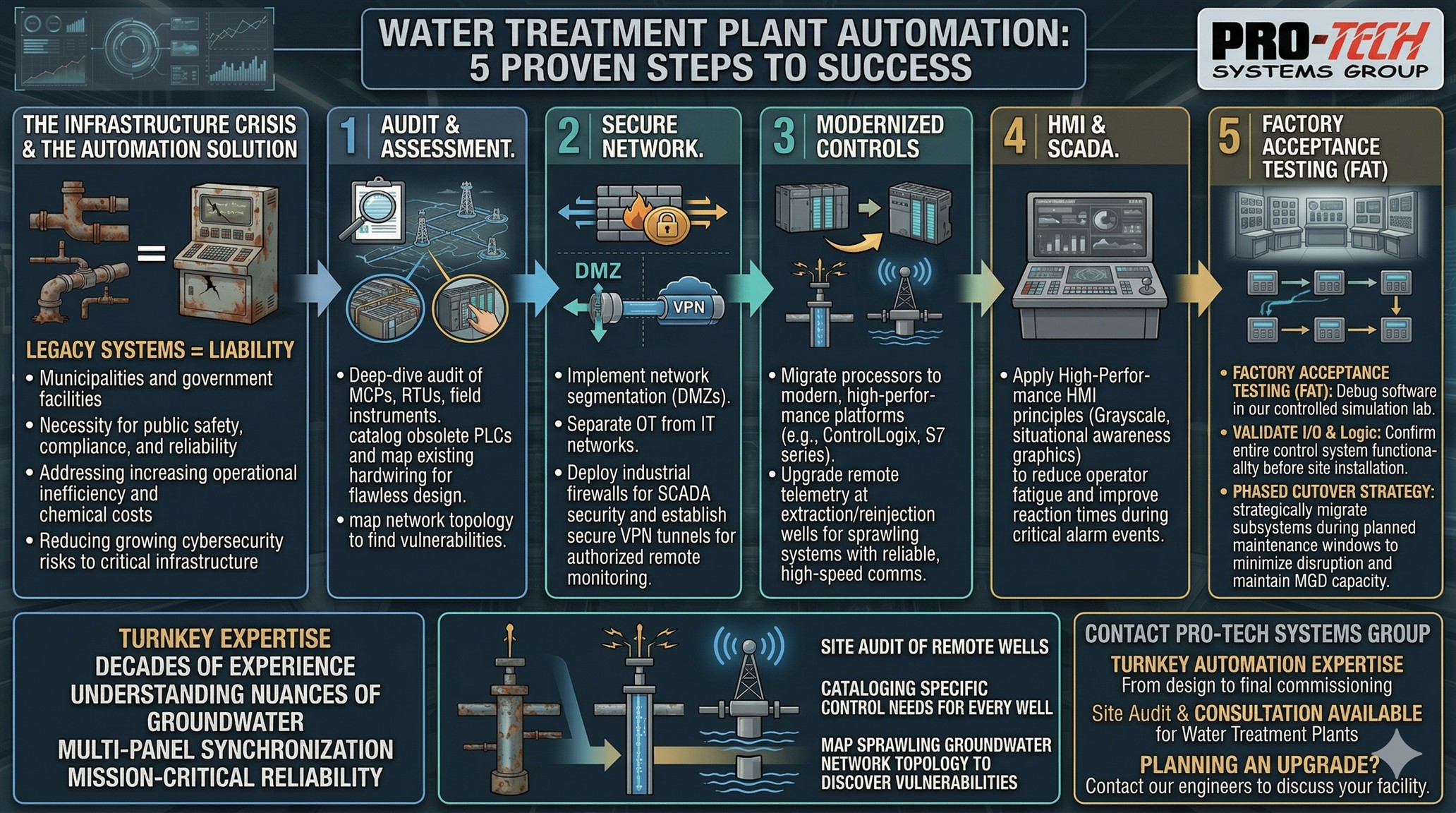
Municipalities and government facilities across the country are facing a critical infrastructure crisis. Relying on aging, legacy control systems to manage complex groundwater extraction and treatment facilities is a massive liability. Upgrading these systems through modern water treatment plant automation is no longer just an operational upgrade; it is an absolute necessity for ensuring public safety, environmental compliance, and system reliability.
However, migrating a live, multi-million-gallon-per-day (MGD) facility to a new control architecture is a high-stakes engineering challenge. Whether you are managing dozens of remote extraction wells, complex reinjection systems, or multiple main control panels, a flawless transition requires a rigorous methodology. In this comprehensive guide, we outline the five proven steps for executing successful water treatment plant automation upgrades without compromising facility uptime.
Table of Contents
The Complexities of Large-Scale Water Treatment Plant Automation
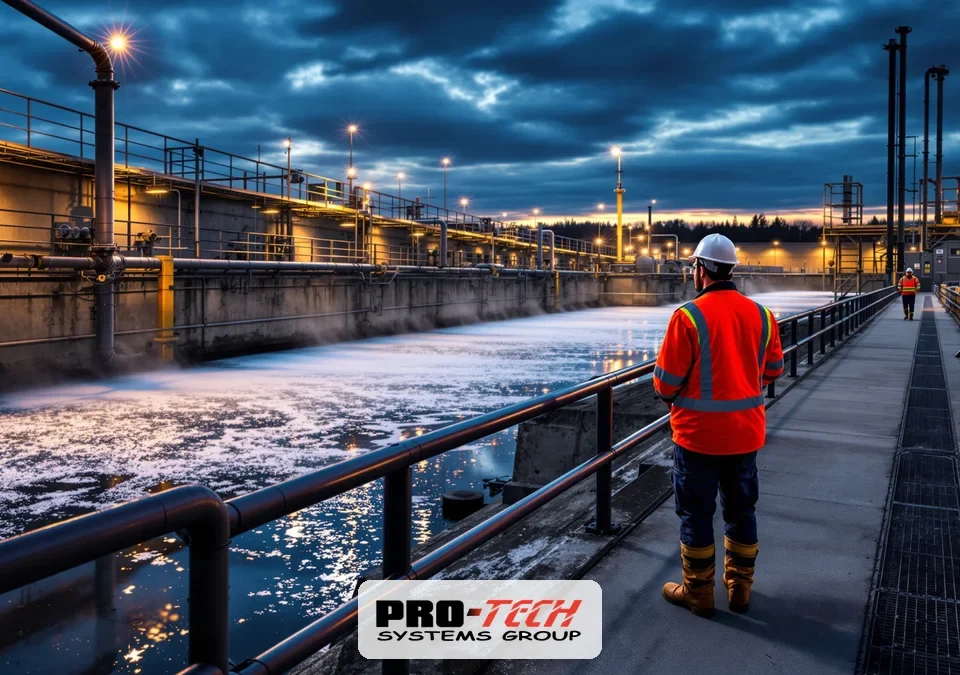
Upgrading a massive groundwater treatment and extraction system is vastly different from a standard manufacturing line upgrade. These facilities often span wide geographic areas, incorporating numerous remote wells that must communicate flawlessly with central treatment plants. A successful water treatment plant automation strategy must account for legacy hardware compatibility, stringent cybersecurity requirements, and the absolute mandate for zero unplanned downtime during the cutover process.
To navigate these complexities, top-tier systems integrators rely on a phased, highly documented approach. According to guidelines set forth by the American Water Works Association (AWWA), robust planning and cybersecurity integration are the bedrock of resilient water infrastructure.
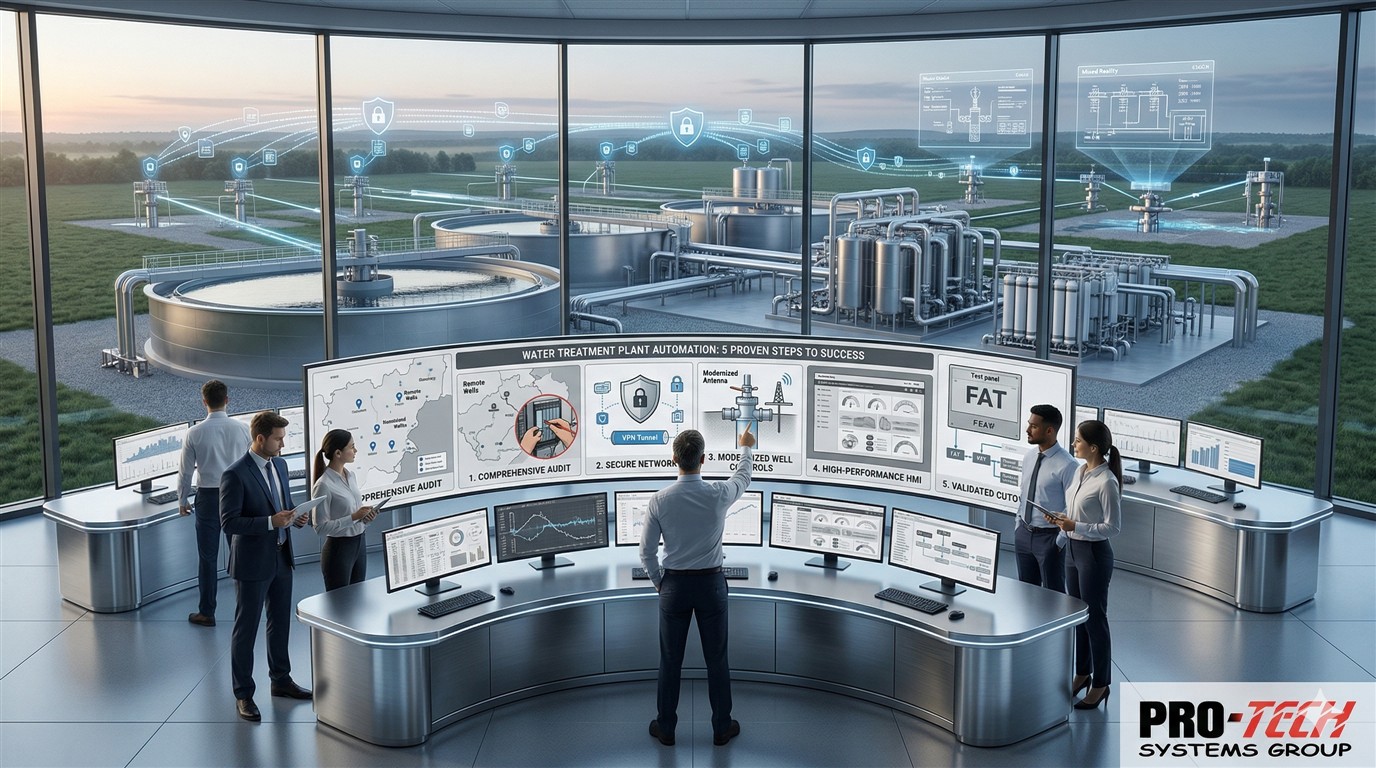
5 Proven Steps for Modernizing Water Control Systems
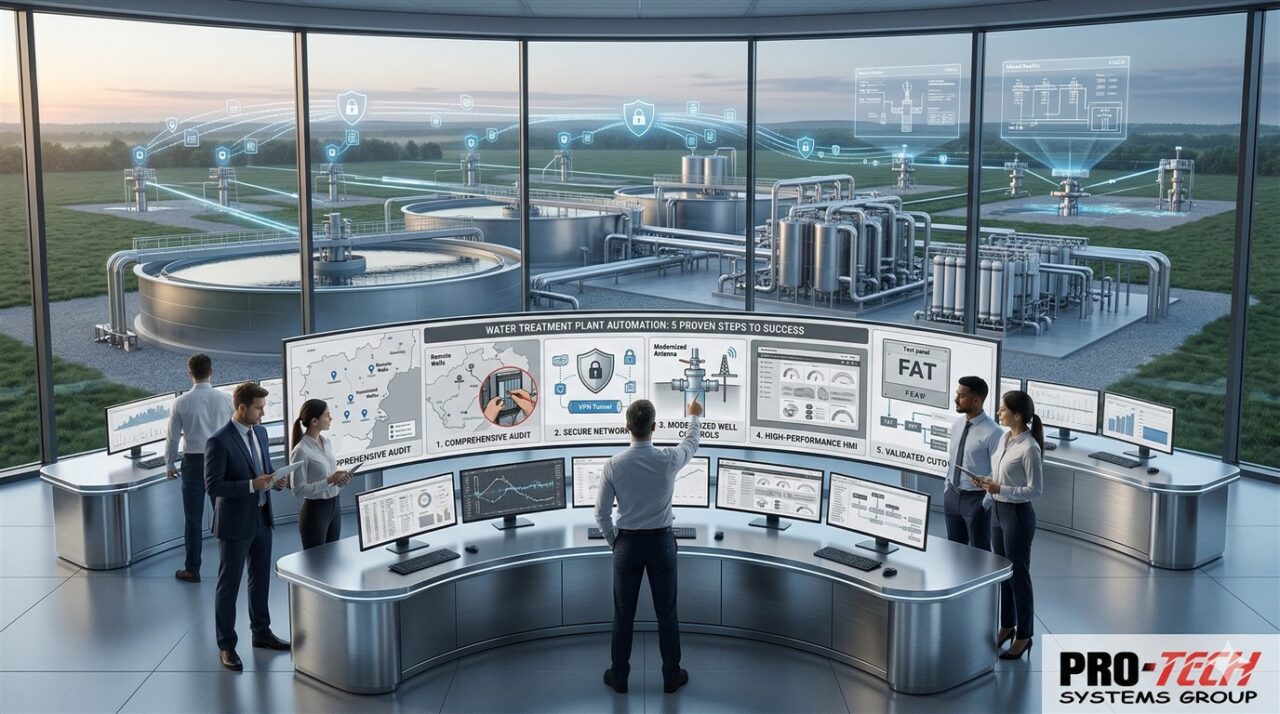
1. Comprehensive System Audit and Site Assessment
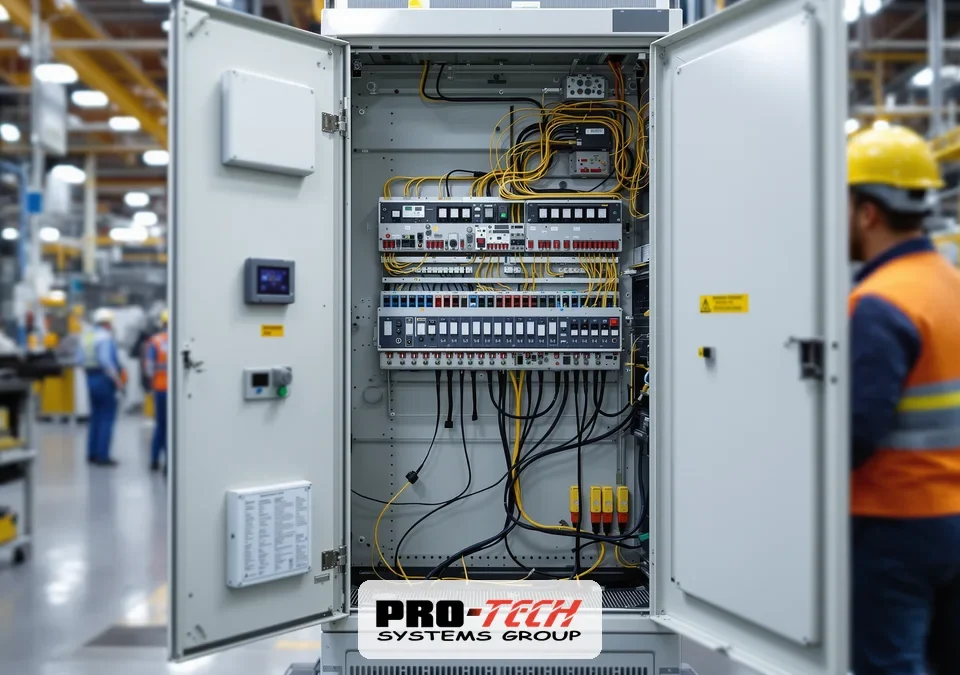
You cannot effectively upgrade a system if you do not have a perfect understanding of its current state. The first step in any major water treatment plant automation project is a deep-dive audit. Our engineers physically inspect every Main Control Panel (MCP), remote terminal unit (RTU), and field instrument. For large-scale groundwater projects, this means cataloging the specific control requirements for every single extraction well and reinjection well in the network. We identify obsolete PLCs, document existing hardwiring, and map the current network topology to uncover hidden vulnerabilities before the design phase begins.
2. Secure Network Architecture and IT/OT Convergence
Modern control systems thrive on data, but connectivity introduces cyber risk. A critical phase of water treatment plant automation is designing a secure network architecture. We implement strict network segmentation, establishing Demilitarized Zones (DMZs) to safely separate your Operational Technology (OT) from the corporate IT network. By integrating industrial firewalls and secure VPN tunnels for remote monitoring, we ensure your facility’s SCADA network is protected against modern cyber threats while still allowing authorized personnel to access real-time operational data.
3. Modernizing PLCs and Extraction Well Controls
The heart of your facility’s physical operations lies in its Programmable Logic Controllers (PLCs). Legacy controllers are prone to failure and lack the processing power for advanced analytics. A core component of water treatment plant automation involves migrating these outdated processors to modern, high-performance platforms (such as Allen-Bradley ControlLogix or Siemens S7 series). For sprawling groundwater systems, this also involves upgrading the remote telemetry at the extraction and reinjection wells, ensuring high-speed, reliable communication back to the main treatment plant’s central SCADA servers.
4. High-Performance HMI and SCADA Development
Data is useless if your operators cannot interpret it quickly. Outdated, cluttered interface screens lead to operator fatigue and delayed reaction times during critical alarm events. We apply High-Performance Human-Machine Interface (HMI) design principles to all our water treatment plant automation projects. By utilizing grayscale backgrounds, situational awareness graphics, and distinct, prioritized alarm colors, we build an intuitive SCADA environment. This empowers your operators to instantly recognize anomalies, manage well capacities efficiently, and maintain optimal treatment flow rates.
5. Factory Acceptance Testing (FAT) and Phased Cutover
A water facility cannot afford to “test in production.” Before any new hardware is installed on-site, the entire control system must undergo rigorous Factory Acceptance Testing (FAT). We simulate the plant’s exact I/O and process logic in our facility, allowing us to debug the software in a safe environment. Once validated, the final step of water treatment plant automation is the phased cutover. We strategically migrate individual panels and well subsystems one at a time during planned maintenance windows, ensuring the facility maintains its required MGD capacity throughout the entire upgrade process.
Frequently Asked Questions
Yes. For critical municipal infrastructure, zero unplanned downtime is a mandate. Through a rigorous process called a "phased cutover" and comprehensive Factory Acceptance Testing (FAT), expert integrators can migrate individual main control panels and extraction wells one at a time. This ensures the facility maintains its required daily flow capacity throughout the entire water treatment plant automation project.
Legacy PLCs and outdated SCADA software running on unsupported operating systems are highly vulnerable to cyber threats. Modern water treatment plant automation inherently involves implementing secure network architectures. This includes strict IT/OT network segmentation, industrial firewalls, and encrypted remote access, ensuring your facility complies with the latest AWWA and EPA cybersecurity guidelines.
Absolutely. A key component of expert water treatment plant automation is bridging the gap between legacy field hardware and modern centralized software. We can often install new Remote Terminal Units (RTUs) or edge gateways at existing well sites. This brings their data into a modern, unified SCADA system without requiring a costly "rip and replace" of your existing physical pumps and piping.
High-Performance HMIs replace cluttered, overly colorful graphics with clean, grayscale layouts where bright colors are reserved strictly for abnormal situations. In water treatment plant automation, this design philosophy drastically reduces operator fatigue. It allows operators to instantly identify and react to critical issues—such as a failing reinjection pump or a pressure drop—before they escalate into facility-wide emergencies.
Choosing the Right Partner for Water Treatment Plant Automation
Executing a full system-wide control upgrade for a facility handling millions of gallons per day requires a highly specialized skill set. It requires a systems integrator who understands the nuances of groundwater extraction, multi-panel synchronization, and mission-critical reliability.
At Pro-Tech Systems Group, we have decades of experience executing complex water treatment plant automation projects. From designing the initial control architecture to the final commissioning of your extraction wells, we provide the turnkey expertise required to modernize your municipal or government water infrastructure.
To learn more about our specific capabilities in this sector, explore our Water and Wastewater Control Systems page, or review our broader Control Systems integration services.
Are you preparing a bid or planning an upgrade for a major water treatment facility? Contact Pro-Tech Systems Group today to discuss your project requirements with our expert engineers.