Unlock the Future: 5 Revolutionary Benefits of AI in Industrial Automation
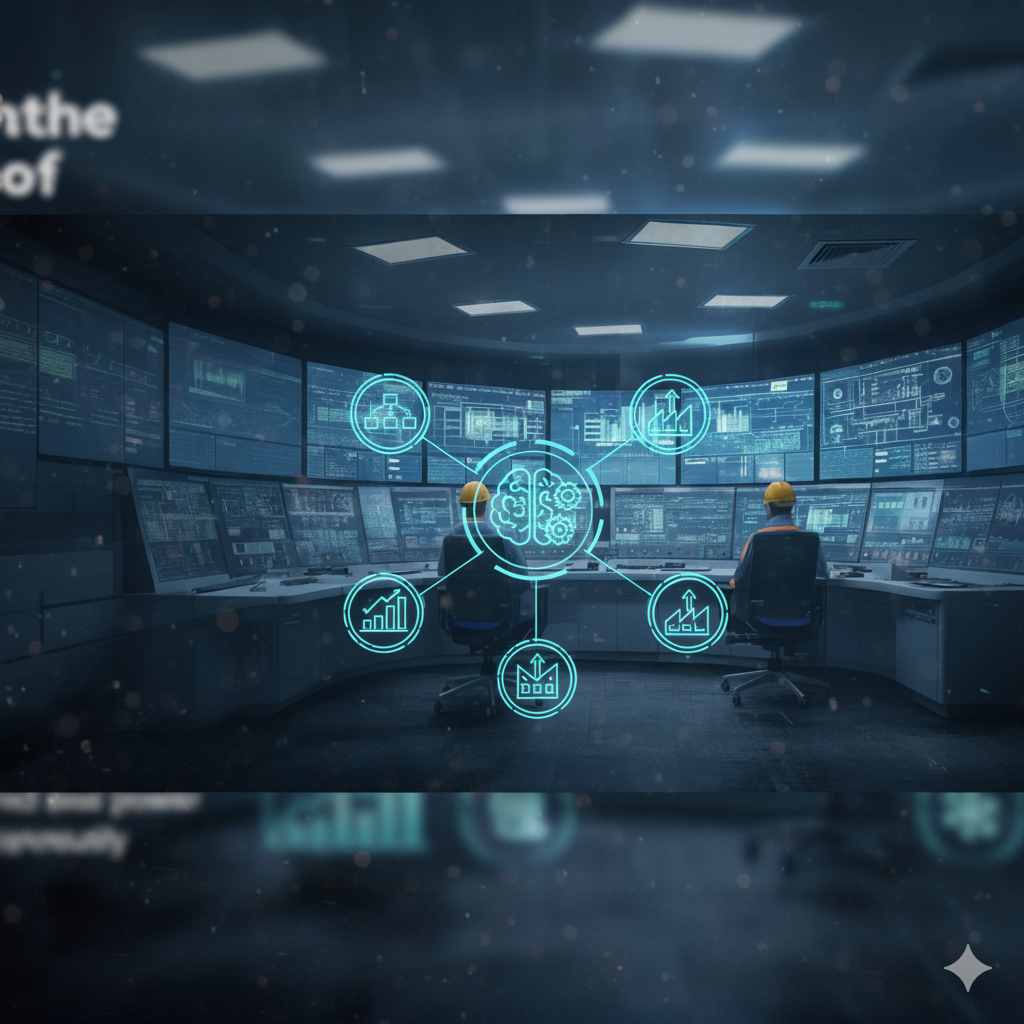
For decades, industrial automation has been defined by programmed, repetitive tasks. A PLC tells a robot to weld a specific point, and it does so, millions of times. But what if your systems could do more than just repeat? What if they could learn, adapt, and make intelligent decisions to optimize your entire operation? This is the promise of **AI in industrial automation**, and it represents the next great leap forward in manufacturing and process control.
The transition to Industry 4.0 is about creating smarter, more connected facilities. Artificial Intelligence (AI) and Machine Learning (ML) are the brains behind this revolution, transforming the data from your plant floor into a powerful competitive advantage. Let’s explore five revolutionary benefits of integrating **AI in industrial automation** and how it is reshaping the future.
Table of Contents
What is AI in the Context of Automation and Control Systems?
Before diving into the benefits, it’s important to demystify the term. **AI in industrial automation** isn’t about sentient robots; it’s about using sophisticated algorithms to analyze the massive streams of data generated by your equipment. This data comes from your SCADA systems, sensors, and PLCs. According to leading publications like Forbes, AI’s role is to find complex patterns in this data that are invisible to the human eye, enabling a level of process optimization and predictive power that was previously impossible.
5 Transformative Benefits of AI in the Plant
1. Revolutionary Predictive Maintenance (PdM)
The traditional approach to maintenance is either reactive (fix it when it breaks) or preventative (fix it on a schedule). AI offers a vastly superior model: predictive maintenance. By analyzing real-time data from sensors—monitoring vibration, temperature, and performance—Machine Learning models can predict equipment failures with incredible accuracy *before* they happen. This allows you to schedule repairs with minimal disruption, eliminate costly unplanned downtime, and extend the lifespan of your critical assets.
2. Ultimate Process Optimization
Imagine a complex chemical process with hundreds of variables. An experienced operator can keep it within safe and effective parameters, but finding the absolute optimal settings for maximum yield and minimum energy use is a monumental task. AI excels at this. It can analyze every variable simultaneously, conducting millions of virtual experiments to identify the perfect combination of settings. This leads to significant reductions in energy consumption, less raw material waste, and higher product quality, directly impacting your bottom line. It’s the next evolution of process automation solutions.
3. Enhanced Quality Control with Machine Vision
Human inspection is prone to fatigue and error, especially on high-speed production lines. AI-powered machine vision systems use high-resolution cameras and intelligent algorithms to inspect products with superhuman speed and accuracy. These systems can identify microscopic defects, ensure proper assembly, and verify packaging, all without slowing down production. This not only improves product quality but also reduces the costs associated with defects and recalls.
4. Smarter, More Flexible Robotics
Traditional industrial robots are programmed for a single, repetitive task. AI is making them more adaptable. With AI-driven vision and sensors, robots can now identify and handle a wider variety of objects, work safely alongside human counterparts (cobots), and even learn new tasks through demonstration. This flexibility is essential for modern manufacturing environments that require rapid changeovers and customization.
5. Improved Safety and Anomaly Detection
The same pattern-recognition that powers predictive maintenance can also be used to enhance plant safety. AI can monitor sensor data and security feeds to detect abnormal patterns that might indicate a safety risk, a gas leak, or even a cybersecurity threat. This proactive anomaly detection is a crucial layer in modern industrial cybersecurity solutions, providing an early warning system to prevent incidents before they escalate.
How to Prepare for AI in Your Facility
The journey into **AI in industrial automation** begins with a strong foundation. The power of any AI system is entirely dependent on the quality and quantity of the data it receives. Therefore, the first and most critical step is to ensure you have a modern, well-designed data infrastructure.
At Pro-Tech Systems Group, we specialize in building the high-performance foundation your facility needs to be ready for the future of **AI in industrial automation**. We design and implement the advanced control and data acquisition systems that will serve as the engine for your future AI initiatives.
Ready to unlock the future of your operations? Contact Pro-Tech today to discuss how we can build an AI-ready foundation for your automation and control systems.